How Anticipation Shapes Travel Bliss (Before You Ever Leave Home)
Originally Published Jan 2022; Revised Jan 2025
By Tracy | Travel Bug Tonic
Much of the joy of travel doesn’t happen on the road. It happens before you go.
That flutter of excitement when a trip idea first takes shape. The research rabbit holes filled with possibility. The imagining of what it will feel like when you’re somewhere new.
Anticipation isn’t a side effect of travel. It’s a powerful emotional state that shapes how deeply we enjoy the journey, how resilient we are when things go sideways, and how much meaning we carry home with us.
Think back to a time when you were looking forward to something deeply: a trip, a celebration, a long-awaited change, even Christmas morning! That restless energy that made it hard to sleep wasn’t just excitement; it was anticipation at work.
Travel Planning Builds Anticipation
Studies show that simply having a trip to look forward to correlates with higher happiness than everyday routines. (Psychology Today) What’s more interesting is that the research also shows that the more actively a person plans their trip, the more they anticipate it, and the happier they feel. In other words, travellers who stay engaged in shaping their own experiences increase their anticipation, travel satisfaction, and, according to studies, life satisfaction for a longer period. In fact, when the planning phase is omitted because a person has booked a packaged tour or has left all the activity choices to someone else, the level of anticipation is lowered, and satisfaction is at risk, too.
Stoke Anticipation: It Grows Where Intention Lives
Ask yourself:
How much do you engage in travel planning?
Do you hire an agent or company to take care of some or all of the decisions?
How much is your travelling companion knee-deep in the options and choices, and how involved are you?
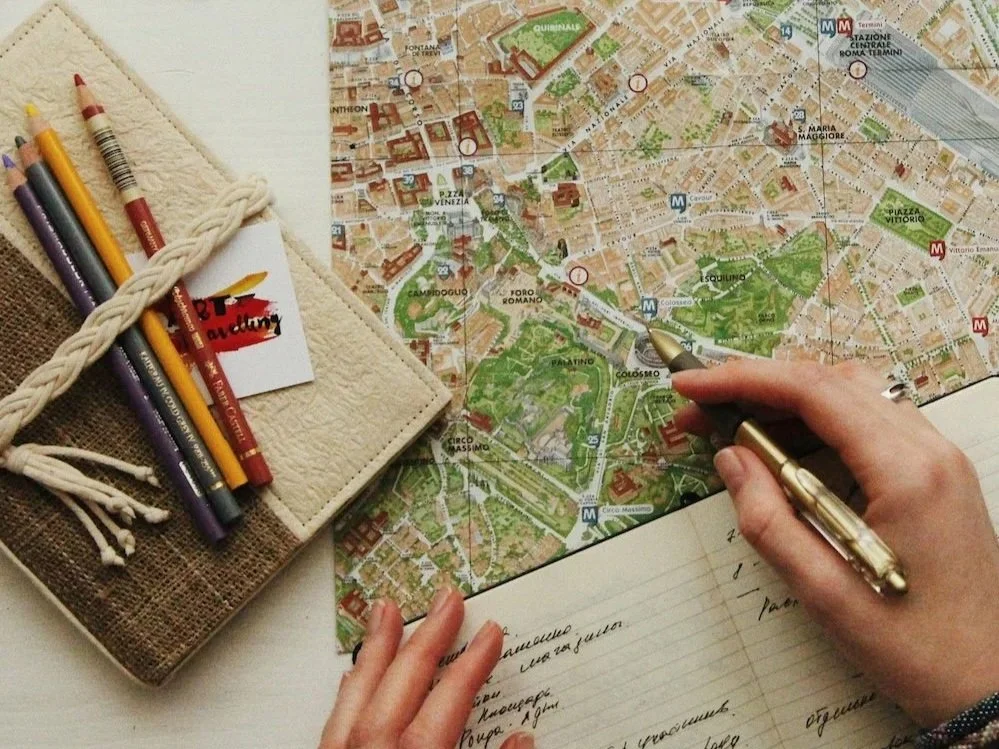
Travel planning is big business, and the internet has made it easier than ever for the average person to research destinations, build itineraries, and feel confident clicking “book.” Now AI has entered the picture, which opens up even more options and ideas at lightning speed. Too many choices can feel overwhelming or even paralyzing. It can also take away the quieter thinking and reflection that helps us figure out what we actually want, rather than just following the well-marketed or most convenient suggestion.
Anticipation plays into this in interesting ways. Looking forward to a trip is usually uplifting, but for some people, it also brings a layer of anxiety. Questions about costs, schedules, or unfamiliar places can creep in and compete with the excitement. It means we need to find a planning style that keeps the joy alive without letting the stress take over.
One place to begin is by gently rethinking the early planning stages. This is your first opportunity to invite positive emotion into the journey, long before you pack a bag.
Create a travel vision board (here’s how)
Schedule time in your calendar to explore one aspect of your destination - watch YouTube videos, follow a Facebook group, read travel blogs. It doesn’t have to be research; it can be inspiration!
Read novels or watch movies set in travel locations. (Thinking of Italy, Spain, Canada? Check out my recommendations.)
Here is a big caveat. More is not better - ie. more planning does not bring greater happiness. Too much of a good thing can go sour, planning included. Beware the tendency to over-plan and to be overly planned!
Even if someone else is doing most of the planning, you might experiment with getting a little more involved by noticing where you’d like to have a voice, or by integrating one experience that speaks to your travel motivations. Often, that’s enough to move a trip from generic to meaningful.
“Travel is ninety percent anticipation and ten percent recollection.”
Travel planning is not dreaming.
Anticipation deepens when a decision is made and the body registers: this is happening.
I wouldn’t feel Christmas Eve excitement if I knew it was only pretend. Planning must have an aspect of commitment and intention to foster a true feeling of anticipation. Sure, you can dream about travel adventures for years, but when you make a decision…the game changes! Things get real!
Anticipation is also about setting the stage for the unexpected. It is not about creating a rigid schedule that doesn’t allow for the realities of travel to happen. You will undoubtedly face late trains, bad weather, something you don’t understand, or something you didn’t know about. When you are involved in planning, research has found that you accept that things can be variable and, when things go south, you are much better prepared to do some problem-solving and be okay with whatever happens.
Research suggests that people who plan and positively anticipate a trip are likely to approach the inevitable travel challenges with a more positive attitude.
The Broaden and Build Theory
In positive psychology, the Broaden and Build Theory suggests that the very presence of positive emotions, including anticipation, expands how we think. These emotions increase self-awareness and encourage open-mindedness, curiosity, and exploration.
Over time, this connection between positive emotions and our more expansive ways of thinking is like a wellbeing workout. We aren’t just feeling good in the moment, we’re actively strengthening our capacity for resilience and happiness. The beauty of this theory is that it acknowledges both negative and positive emotions co-exist, and when we foster the positive ones, we end up building resources to cope with the negative ones. (Dig into the research here.)
Positive emotions and action tendencies
Another interesting element of the theory is the idea of action tendencies, or the urge to act in a particular way when an emotion arises.
Negative emotions tend to have very clear action tendencies. Think about the jolt of anger when someone cuts you off in traffic. Even if you’re not prone to road rage, there’s often an immediate, visceral response.
Positive emotions work differently. They don’t usually push us toward one specific action. Instead, they open us up. They make us more flexible, more experimental, and more willing to explore new possibilities. Take awe, for example. Standing in a forest or staring at a wide-open landscape doesn’t compel a predictable response. It invites wondering.
Anticipation works the same way. The positive emotion of anticipating a trip might subtly change how we think. We begin to wonder about a place, its history, or how it might feel to be there. That curiosity primes our senses, helping us imagine what we might see, taste, learn, or experience. This, then, influences our concrete travel planning decisions.

Anticipation quietly shapes the travel experience long before the journey begins.
Bringing It Home
If you strip away the words “travel” and “trip,” this article is really about anticipation. Planning something enjoyable creates positive emotions long before it happens, and you don’t need to go anywhere special to experience that.
Your travel motivations offer a roadmap (even if you stay close to home). Whether you’re driven by novelty, connection, escape or growth, those same motivations can guide how you design meaningful experiences wherever you are.
When I intentionally plan close-to-home adventures or micro-adventures, I build anticipation. The extra effort and creativity turns ordinary moments into something extraordinary.
At-home Example

A snowshoe through the forest is beautiful, active fun, but in my hometown, it can feel routine. One day, I wanted to go for an after-work snowshoe, but instead of going where and when we always do, I planned it a little differently. A couple of days beforehand, I dug out our headlamps and suggested we go at night.
The evening was spectacular. Just as importantly, the day or two of anticipation, along with the chance to think outside the box, noticeably boosted my happiness.
It was a reminder that anticipation doesn’t have to be tied to far-flung travel or big plans. Sometimes it’s about pausing, getting curious, and allowing ourselves to imagine something familiar in a new way.
Where in your life could a little more anticipation invite curiosity or awe right now?