
Long Distance Walking Trails in Europe: Research, Inspiration and How to Choose Your Own

updated January 2026
If the thought of long-distance walking trails gives you that exhilarating thrill and feeds your adventurous spirit - I’m right there with you! Beyond being a growing trend in active tourism, there’s something deeply compelling about spending time outdoors, moving through natural beauty, and truly learning about a place on foot.
Europe, in particular, offers a remarkable network of long-distance walking and hiking trails that weave and wind across the continent. For many people, the Camino de Santiago is their first encounter with long-distance walking. It was once a reference point for me too, before I began exploring what exists beyond any single route. From historic paths to lesser-known trails, Europe has long embraced a culture of long-distance walking and thru hikes, making it an ideal place to look beyond the well-trodden Camino de Santiago.


The Difference Between Long Distance Walking and Thru Hikes
What is Thru hiking? What is a pilgrimage? Is this hiking or walking, or what?
I’ve hiked, walked, and run my fair share of kilometres, predominantly in my beautiful province of British Columbia, and the concept of travelling internationally to walk for days has long captivated me. Followers also know I love travel research and I've spent considerable time in front of the computer or flipping through travel books, being both inspired and overwhelmed by the information, descriptions and options. (And the irony of extended sitting while I research long-distance walking is not lost on me!)
To aid in internet searching, I found it helpful to search for a variety of terms that describe long-distance walking, including thru-hiking, inn-to-inn hiking or walking, and pilgrimage.
Thru hiking trails
The act of hiking an established long-distance trail in one direction from point to point. For example, hiking the Cotswolds from Chipping Camden to Bath.
I happen to LOVE this definition simply because I hate backtracking! Hate is too strong a word, but I have been known to go out of my way to avoid out-and-back travel. Even back when I was picking up my kids from school I turned the drive across town into a loop!
Inn-to-Inn hiking or walking
A multi-day journey where you hike every day from one accommodation to another. The accommodations might be alpine meadow huts or charming bed and breakfast inns. The hike can be designed yourself but often is a curated self-guided tour.
Much like thru-hiking trails, this is the concept I tried to copy for my first solo journey on the Vancouver Island Trail. I was forced to get creative when finding accommodations close to the trail and ended up camping for one night. Trails in places like Europe, on the other hand, have walking traditions and policies like “freedom to roam” allowing public access to the wilderness which makes inn-to-inn hiking routes easier to plan!
Pilgrimage
A quest to some sacred place as an act of religious devotion OR the more secular definition, is a journey full of intention and meaning. Think Camino de Santiago.
I am a proponent of journeys full of meaning and believe that any kind of travel (walking or not) will benefit from intention! The concept of pilgrimage is deep. One of my favourite podcast hosts and author Jo Frances Penn writes that she ignored her call to pilgrimage for years. Many episodes of her podcast series, Books and Travel, follow her exploration of a secular pilgrimage described as an outer journey toward a place that has personal meaning, but also an inner exploration.
Iconic Long Distance Walking: The Camino de Santiago
Where I live, if you mention your interest in long-distance walking to anyone, they will likely ask if you’ve done or will be doing the Camino de Santiago. Also known as the Way of St. James, the Camino is a pilgrimage deeply rooted in Christianity. The remains of the apostle Saint James are said to lie in the cathedral in Santiago de Compostela, and the tradition since the 9th Century, is that people walk from wherever they live across Western Europe to the cathedral to bear witness and deepen their devotion.

The Camino de Santiago is popular!
It is one of the most famous pilgrimages in the world and continues to surge in popularity. From 280,000 registered walkers in 2016 to 440,000 walkers who completed at least 100km of the Camino in 2023.
In essence, the Camino de Santiago is a long-distance thru-hike where you stay in hostels called albergues or local hotels each night. It has a very well-established infrastructure (for over 1000 years!) of places to eat and stay that support pilgrims along the way. Some people still complete the journey for religious reasons, but now, secular walkers are in the mix with intentions that range from inner spiritual journeys to physical achievement to a slow taste of Spanish and Portuguese culture and history.
I would also suspect that there are a few FOMO pilgrims…people who have the “fear of missing out” given the popularity of the journey and the enticing marketing efforts of related businesses.
Camino de Santiago Alternatives for Long Distance Walking

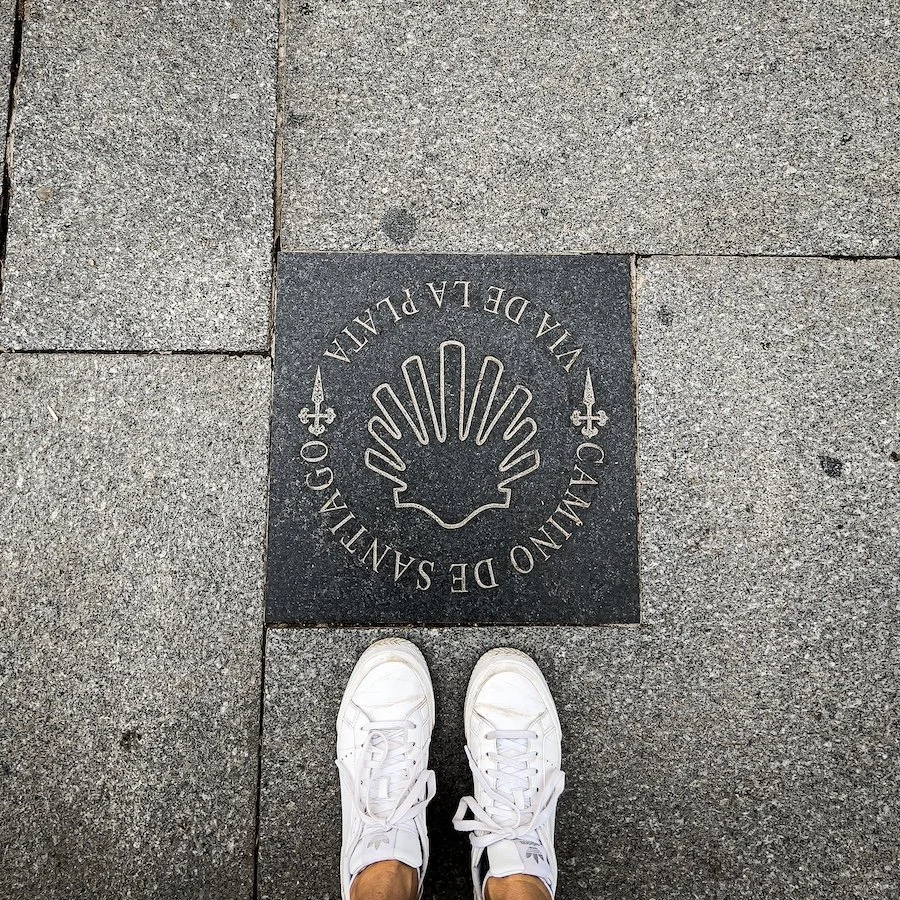
1% of the Via de la Plata complete! 😉
For a long time, I hovered on the edges of the Camino. I felt that familiar mix of curiosity, quiet resistance, and a streak of wanting to do things differently. Was it a genuine call to pilgrimage, or simply a fear of missing out? I wasn’t sure, and for years, I let that question sit unanswered.
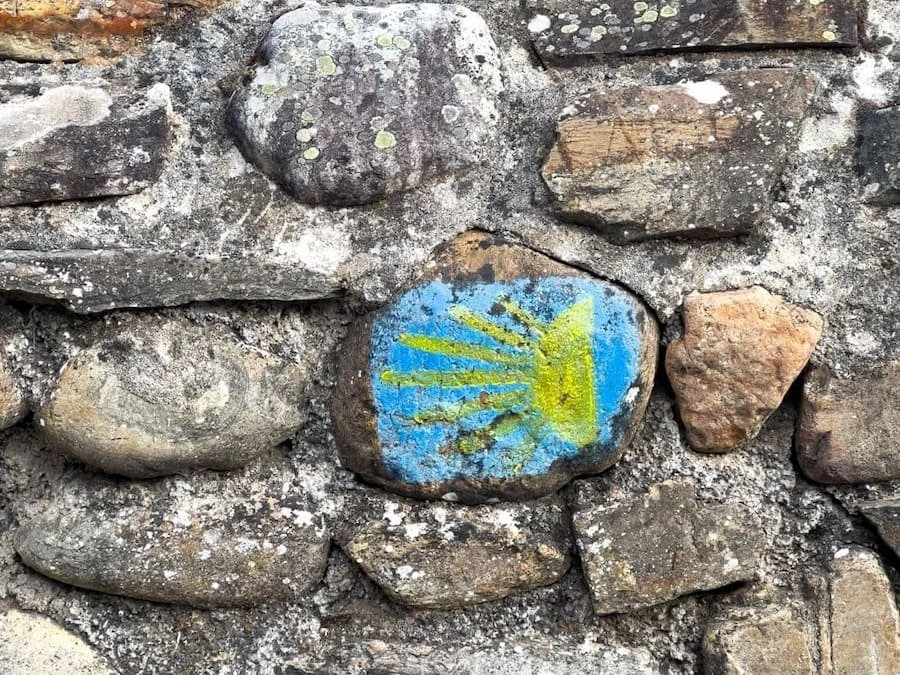
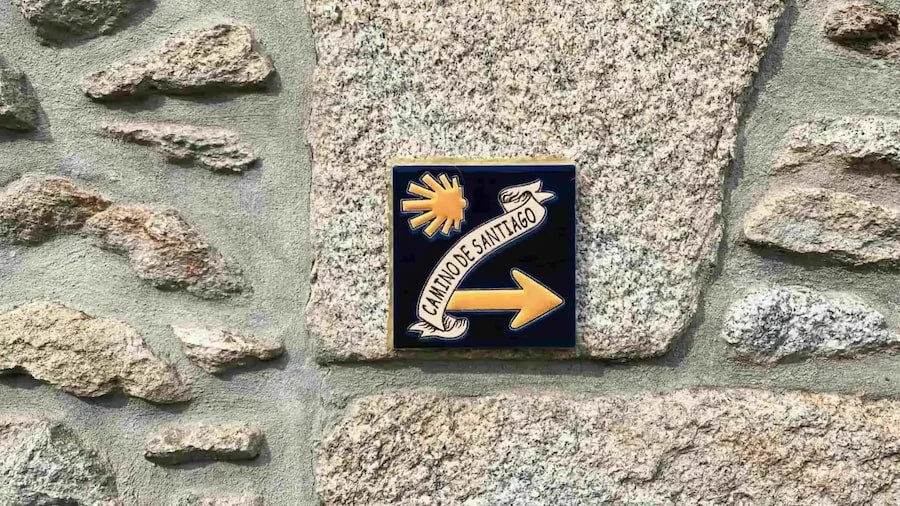
My first taste of the Camino came in small pieces. I walked a short section of the Via de la Plata, the longest Camino route, beginning at the imposing Cathedral in Seville and heading out toward Itálica, an ancient Roman city just beyond the city limits. Technically, it amounted to only a fraction of the route, but it was enough to make the Camino feel real rather than abstract. Later, while travelling in Portugal, I became quietly Camino-aware, delighting in the familiar scallop shell markers that appear when you least expect them.
In 2025, I finally stepped fully into the experience and walked 350km of the Camino Francés starting from León. That walk didn’t erase my earlier questions. It answered some of them and complicated others in ways I didn’t anticipate.
I still won’t tell you what your first or next long-distance walk should be. That decision belongs entirely to you. What I can offer is reflection shaped by both anticipation and experience, as I continue to explore what long-distance walking means to me and how it might fit into your own journey.
If the Camino is still whispering…read more about my experience below.

Long-Distance Walking Benefits
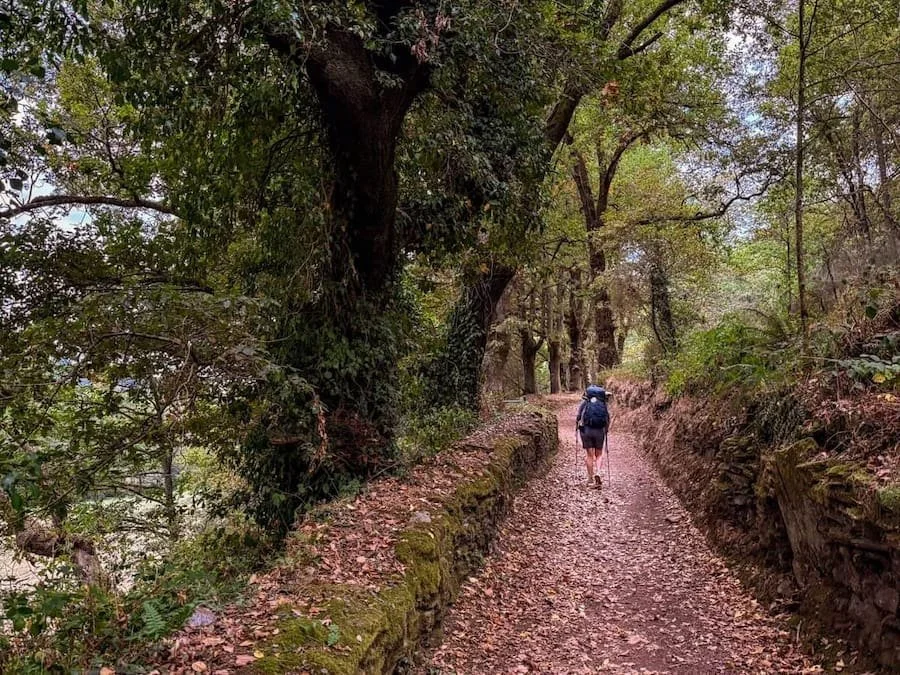
Long-distance walking sits somewhere between hiking and travel. It doesn’t require technical skills or extreme fitness, but it does ask for patience, curiosity, and a willingness to slow down. For me, it fits naturally into how I think about travel with intention.
If you’ve read any of my other articles, you’ll know that I’m an advocate for travelling with purpose. I’ve written, “Travel with intention has a foothold in purpose, and we know that living with purpose is good for us. The magic comes when you set an intention and use it as a touchstone for planning your travel experience: what to say yes and no to, even deciding where to go, and who to go with.”
I’m still a fairly new long-distance walker. That’s part of why intention matters so much to me. I need a filter to help me choose which long-distance walking trails are right for this stage of my life. The journey needs to align with why I want to walk.
Because I can, and I’m grateful.
I don’t take my physical ability for granted. Walking feels like both a privilege and an investment. I truly believe that moving my body this way will help me stay healthier for longer.
To slow down and experience a place more deeply.
Walking brings me closer to my surroundings. It engages all my senses and creates an intimate connection with the land and culture. I love the pace of being on foot: unhurried, unregulated, and wonderfully individual.
For the perspective.
When I travel on foot, the focus shifts from the destination to the journey itself. Flying over landscapes or speeding through them by train or car may tick off more places, but it misses the quiet magic that exists between destinations.
To satisfy an authentic curiosity.
As my body moves, my mind absorbs stories. Following long-used paths and old routes feels like stepping into living history, shaped by the people who walked there before me.
Because walking is good for my well-being.
Both experience and research agree on this one. Long-distance walking supports physical health, mental clarity, and resilience in ways that feel surprisingly profound.
And if I’m being completely honest, there are a few practical caveats. I’m not looking to camp, but I don’t need luxury either. I prefer flatter terrain to mountains, and I absolutely require access to good food and coffee. Intention, after all, doesn’t mean discomfort for its own sake.
If you are looking for long-distance walking shoes, check out my post: Best Boot Buying Tips for Long Distance Hike
Well-Being Science Behind Long Distance Walking Benefits
Long-distance walking is an ancient practice found across cultures and continents, shaped by necessity, ritual, and exploration. One of the most obvious reasons people continue to walk long distance today is physical health. But increasingly, long-distance walking is also being explored for its psychological and emotional benefits. Some even describe it as a form of moving meditation or informal psychotherapy.
Research supports this idea. A study published in the International Journal of Environmental Research and Public Health examined the mental health benefits of long-distance walking and found that its therapeutic effect comes from a powerful combination: sustained physical activity paired with time spent in nature. This is known as green exercise, a term that was new to me, and it refers to the harmonizing influence natural environments can have on physiological stress responses.
Walking through quiet, natural landscapes encourages a sense of stillness that’s increasingly rare in everyday life. The study suggests this calm, repetitive movement may help reduce stress and mental fatigue, while also subtly altering how we experience time. Hours feel slower, fuller, and more expansive when measured in footsteps rather than schedules.
Interestingly, the findings also suggest that even relatively shorter long-distance walks can have positive effects on stress, anxiety, and low mood. Longer long-distance walking journeys, however, may offer deeper benefits, particularly in reducing broader mental distress. In other words, the longer and more immersive the walk, the more space there may be for restoration and reflection.
Long Distance Hiking Trails Around the World
With my “whys” and intentions in mind, I’ve narrowed the focus of my research to a short-list of thru-hikes. Your list will look different, and I’m interested to learn about your choices! I’ve updated this list with links to other blogs as I do the trails and learn more.
If you are still in research mode, one place I’d suggest beginning is the website for National Trails in the UK. There is a long and deep walking culture in the United Kingdom, and this website offers detailed information on the 16 National Trails of Great Britain. Three of my top pics are UK National Trails.

Hadrian’s Wall, UK
Description: Through the countryside and over Northumbrian crags following the remains of a Roman fortification built in 122 AD.
Route: Bowness-on-Solway to South Shields
Length & difficulty: 84 miles / 135 km; easy/moderate
Why this caught my eye: well-maintained paths, plenty of historical sites, and a sense of immersion in Roman history. Plus my Dad walked this path in the 1980’s and speaks fondly of the adventure.

The Cotswold Way, UK
Description: Through charming little market towns connected by lanes and farmers' fields following the Cotswold escarpment.
Route: Chipping Campden to Bath (a world heritage city)
Length & difficulty: 102 miles / 164 km; easy/moderate
Why this caught my eye: a taste of quintessential English countryside home to ancient castles, Neolithic burial grounds, idyllic villages and breathtaking views.

South West Coast Path, UK
Description: England's longest waymarked long-distance footpath along the dramatic coastlines of Devon and Cornwall.
Route: Minehead, Somerset to Poole Harbour, Dorset
Length & difficulty: 630 miles / 1014 km; the difficulty depends on the section and how far you go
Why this caught my eye: The trail has 7 sections of varying lengths with train connections throughout. The association’s website makes planning a journey easy!

DIY the UK Canal Towpaths
Description: Not originally built for walking but an ideal system of flat paths steeped with history, art, villages, pubs and canal culture.
Route: DIY from this great map
Length & difficulty: 2000 miles / 3218 km of canals; easy
Why this caught my eye: One year my parents lived aboard a canal boat and poked through the canal network across England. I visited them and learned about canal towpaths - flat, quiet, beautiful! There are tunnels, locks, viaducts and NO traffic.

Via Francigena, Italy
Description: An ancient route between Canterbury, England, and Rome, Italy - crossing through France and Switzerland. The definition is “the road that comes from France".”
Route: Via Francigena route map
Length & difficulty: 1,200 miles/1931 km
Why this caught my eye: I spent a day on the Via Francigena while in Rome - see my instagram post here. This Via Francigena feels ancient under your feet. Because it is very long - sections are often completed, with the most popular section in Tuscany.

Atlas Mountains, Morocco
Description: Hiking across Morocco unveils a breathtaking tapestry of landscapes - unique trails and cultural encounters.
Route: There are multiple options to find your way through the Atlas Mountains including the Toubkal Circuit and the M’Goun Travers, and the Dades Gorge.
Length & difficulty: it depends!!
Why this caught my eye: I went with a tour company that led a women’s only expedition - four days through the mountains from village to village. I loved it so much that I am returning with a new group of women in 2026!

The Island Walk, PEI, Canada
Description: Established in 2020, the Island Walk circles Prince Edward Island through beaches, past lighthouses and meandering along red dirt roads.
Route: circumnavigate the island in 32 sections
Length & difficulty: 435 miles / 700 km; flat and easy depending on how far you go
Why this caught my eye: I love Canada! I was born on the East Coast and have a great group of cousins who all live on PEI. Check out this write-up from Journey Woman and the official site with detailed and up-to-date information to help plan: https://theislandwalk.ca/.

Laugavegur, Iceland
Description: Iceland’s breathtaking scenery takes center stage on this hike through diverse landscapes, hot springs, fields of lava, multi-coloured mountains and glaciers!
Route: Landmannalaugar to Þórsmörk
Length & difficulty: 34 miles / 55 km - moderate difficulty
Why this caught my eye: It looks like you’re walking through a National Geographic magazine! The accommodation for this trail is huts. I don’t think I’d DIY this journey and would find a local tour company to help pre-book the stays in the huts!

Fisherman’s Trail, Portugal
Description: Part of the Rota Vicentina hiking route, this path has sand, cliffs and capes along the coast of Portugal
Route: Porto Covo to Lagos
Length & difficulty: 143 miles / 230 km considered moderately challenging
Why this caught my eye: From my time visiting Portugal, this route would undoubtedly have the pleasure of an amazing coastline and outrageously delicious food, great wine, and friendly people.
Other Thru Hikes to Consider
The Peak of the Balkans Trail, the Albanian Alps. 192 km from Northern Albania into southern Kosovo and north-eastern Montenegro.
Kumano Kodō Trail, Japan - ancient pilgrimage route through lush forests, sacred mountains, and atmospheric shrines ~43 miles/70 km
Tour du Mont Blanc, Switzerland, Italy, France - circle Mont Blanc hiking between alpine towns with stunning mountain views and snow-capped peaks ~150 miles/170 km
Lycian Way, Turkey - a rough path along the country's stunning coastline passing ancient ruins, turquoise waters, and charming Mediterranean villages ~335 miles/539 km
Pieterpad, Netherlands - explore the length of the country from Pieterburen, in the northern part of the province of Groningen to the southern tip of the country, on top of ‘Mount’ St. Peter ~ 310 miles/500 km
Kungsleden “The Kings Way”, Sweden - through scenic mountains and the beauty of 4 national parks. Multiple entry and exit points, fairly flat and well-maintained trails ~ 270 miles/450 km
The West Highland Way, Scotland - a path of misty mountains, serene lochs, and enigmatic castles ~ 96-mile/154km
Pembrokeshire Coast Path, Wales - a path that twists and turns along the breathtaking coastline between St Dogmaels and Amroth, Pembrokeshire ~ 186 miles / 299 km
The Lancashire Witches Walk, UK - an 82km/51 mile trail following the route likely taken during the notorious Pendle witch trials of 1612. The walk was created for the 400th Anniversary of the hanging of the Lancashire Witches. It starts in Barrowford and finishes at Lancaster Castle, where the witches were tried.
The Coast to Coast Path, UK - from St. Bees on the Irish Sea, across the width of Northern England to the North Sea at Robin Hood‘s Bay. This walk crosses 3 national parks - the Lake District, the Yorkshire Dales, and the North York Moors~ 192 miles / 309 km
So many options!!! Still deciding? Sometimes the right trail finds you with a little help.
Explore one-on-one travel coaching with me.
How to DIY Your Thru Hiking Experience
Sometimes you don’t have time, or the ability to complete a long-distance walk in its entirety. That shouldn’t cause you to dismiss a trail. Completing a portion of a trail allows you to both get a taste of a trail and to return and savour the trail again (and again).
Section Hiking
Complete a long trail in parts! This is called Section Hiking where you do one specific part of the trail at a time. For example, The Vancouver Island Trail which I followed during my 82 km solo hike is 800 km long. I love completing a new section every year or revisiting my favourite sections.
Hop-on-Hop-Off Approach
There are no rules to say that you have to walk every single day on a thru-hike. Well, at least no rule I believe in. My husband and I were discussing some of my top trail choices and we envisioned doing a few with longer breaks every once in a while. Often people schedule in rest days, but we were thinking of them more like slow exploration days, opportunities to get to know and appreciate the stops along the way. He likened this approach to the Hop-on-Hop-Off busses found in almost every touristy city on the planet! The concept is, that you are in control of when and where you stay put before moving to the next destination.
Pay for Support
I’m a DIYer at heart, but I can see the immense advantages of hiring a knowledgeable company that is located in the country you are going to and/or who partners with local businesses to curate a thru-hike experience for you.
If you go this route, be prepared to be further overwhelmed by the numerous companies who do this and all the options you will have! It can range from having everything planned to being guided, to getting your luggage transferred from place to place.
I urge you to read reviews, ask friends for recommendations, and choose companies that all/most of your dollars directly benefit the country you are visiting. I chose On Foot Holidays for a multi-day hike through Tuscany. I received incredible support, detailed material, and when I had to cancel at the last minute, compassion and expedient support.
Choosing New Paths: How to Find Your Own Long Distance Walk
Consider this article “permission” or strong encouragement to step into long-distance walking in your own way. It’s not only ok to have personal motivation to walk - it’s critical for your enjoyment! Use this self-knowledge to personalize the where, when, and how to walk and don’t doubt your journey or compare it to anyone else’s.
Having walked both iconic routes and quieter paths, I’ve come to believe there’s no single “right” long-distance walk, only the one that aligns with where you are and why you want to walk. If the traditional Camino de Santiago feels both right and exciting as your choice - GO!! But if your reflections about alternatives have opened up ideas on different next steps, follow where that may lead.
I’m very interested in your experiences - both WHY you walked, WHERE you walked, and HOW those journeys unfolded! Comment below or get in touch!
If there’s one thing I hope this article gives you, it’s permission.
Permission to choose your long-distance walk not because it’s iconic, popular, or expected, but because it aligns with where you are and why you want to walk.
