
Las Fallas in Valencia: What the Exhilarating Festival Actually Reveals About Change
It started at 8 am with a bang. Literally.
I was already awake before my alarm, genuinely excited, waiting for it. I'd arrived in Valencia by coincidence more than design. I hadn't planned the trip around Las Fallas and had only learned about the festival in the weeks before arriving. But once I understood what was coming, I wanted to be ready.
The neighbourhood fallas club (casal faller) at the end of our street set off a minute of gunpowder explosions to announce the start of the festival, and the city woke up with it. By the time I'd made coffee, my heart rate was steady again.


Las Fallas is the annual festival that marks the arrival of spring, and it is without question the loudest, most spectacular, most philosophically interesting thing I've ever witnessed as a traveller. A UNESCO Intangible Cultural Heritage celebration, it fills Valencia for three weeks in March with firecracker-filled celebrations, late-night street parties, pyrotechnics of the mascletà, parades, music, and local cuisine. But none of that quite prepares you for what it actually feels like to be part of the action.
What is the Las Fallas Festival?
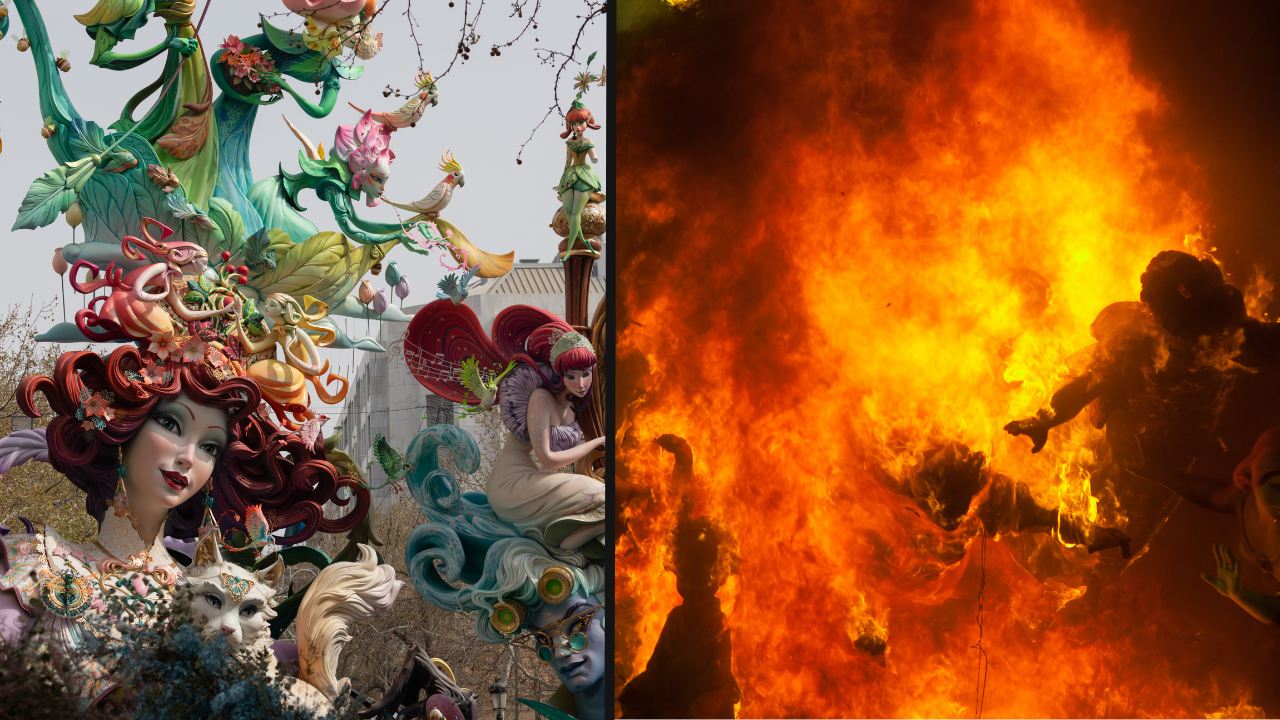
Here is what Las Fallas actually is: neighbourhood artists called falleros or fallaras (female) across Valencia spend an entire year constructing hundreds of sculptures made of wood and papier mâché, called ninots. They range from the politically charged to the whimsical, the tender to the darkly funny, the intricately beautiful to the deliberately absurd. They are displayed for days, and two are chosen by popular vote. The rest - burned. All of them. Reduced to ash amidst fanfare, fire brigades, and city-wide celebration.
The whole city builds. The whole city burns. And then it begins again.
Every single year.
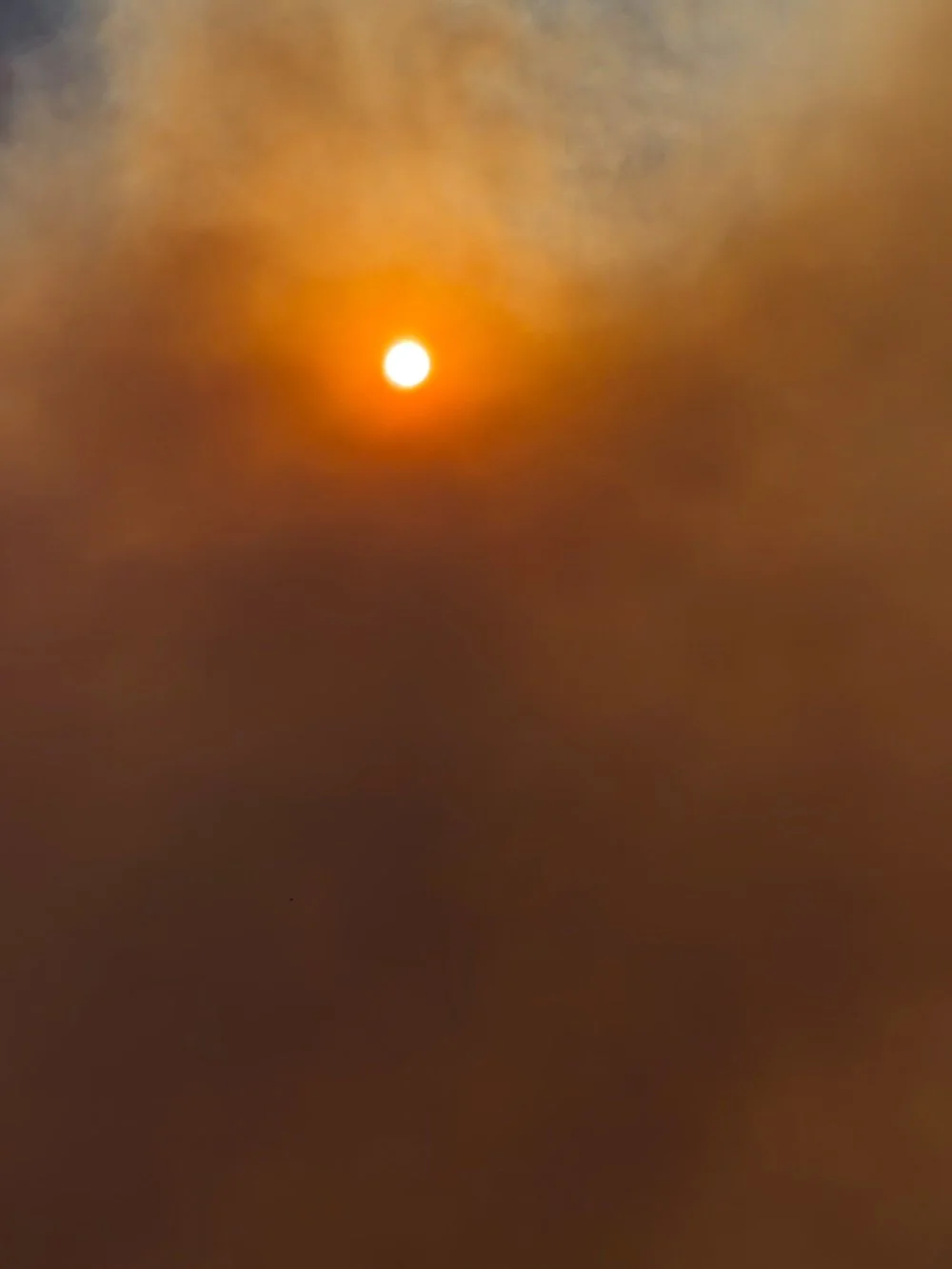
The smoke filled sky after the mascletà
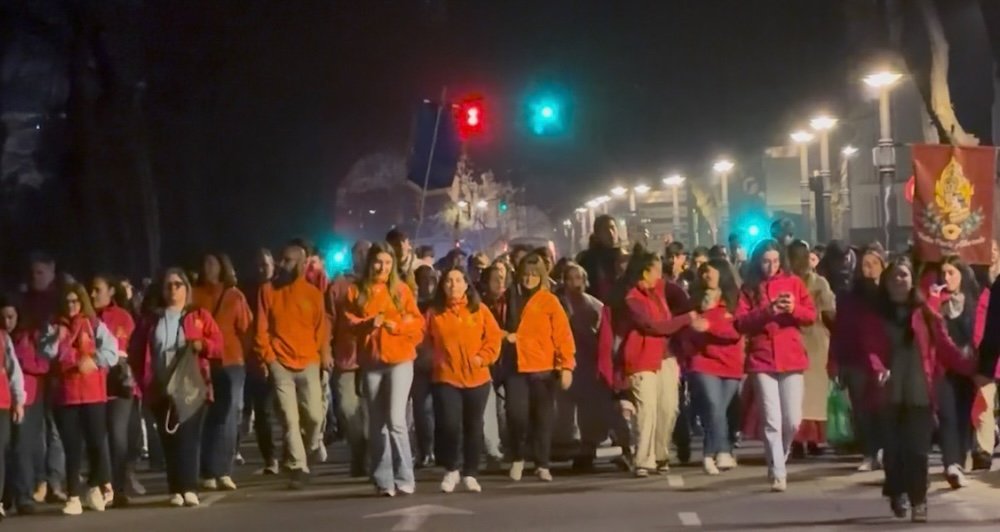
During the opening day activities, my husband and I watched groups party through the streets, each wearing the colours of their neighbourhood association, marching bands and fallas clubs alike. They had spent a year fundraising, planning, commissioning an artist, and building something together. The pride on their faces was unmistakable. So was the knowledge that in a matter of days, it would be gone.
That's the part that stuck with me.
We visited the Fallas exhibition, hosted in Valencia's City of Arts and Sciences, a sprawling, futuristic cultural complex that is spectacular in its own right. Hundreds of ninots filled the space, some enormous, some intimate, and some incredibly poignant. Later in the festival, they are grouped into elaborate Falla monuments reaching up to six stories high in preparation for the burning - La Cremà.
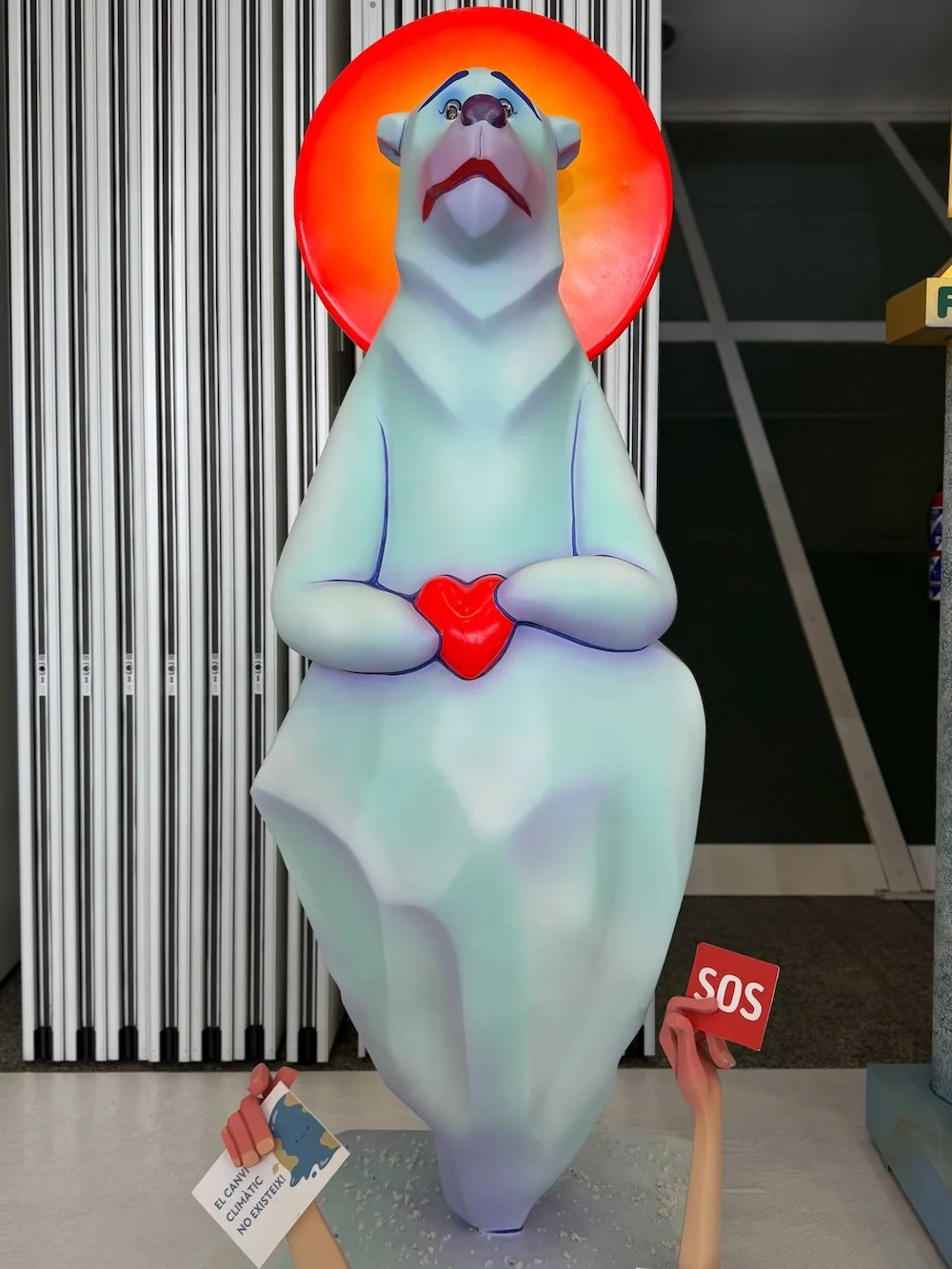
Overwhelmed in the exhibition hall by the quantity and quality of the artwork, I stopped in front of a polar bear, pale blue and mournful, holding a small red heart, flanked by tiny hands reaching up with signs reading "SOS" and "El Canvi Climàtic No Existeix" Climate Change Doesn't Exist. It was simultaneously humorous and heartbreaking, which is exactly the tone of the entire festival.
I didn't see the burning. We were there for the opening, not the cremà. But I've watched the videos, and there is something about seeing a sculpture that took a year to build disappear in minutes that makes me tense. Watching the giant figures, which were works of art just hours earlier, turn to ash is a powerful visual lesson in the transience of life.
What Valencia Chooses to Spare
With my camera filled with images of the 2026 entries, we then went to the Fallas Museum, where the ninots that have been spared by popular vote since 1934 are kept. Each has a small story attached, reflecting what was happening in society at the time of its creation, capturing decades of what Valencia chose to keep, reflecting what mattered enough to save.
Walking through that museum felt like peeking into the city’s diary.
My favourite piece in the museum was from 1961. A chaotic domestic scene: a frazzled mother surrounded by what appears to be an impossible number of small children, one in a bath, one climbing, one crying, a dog underfoot, laundry (with child) hanging from a bare branch. It was titled something like "The Punishment of Being Too Many," a wry comment on the baby boom and the economic pressures of the day. It made me laugh out loud when I made the connection to my husband, born that same year, himself one of seven children. This ninot survived. I wonder if the people who voted for it just related to it so deeply that the humour and the survival-ness of it felt worth keeping.
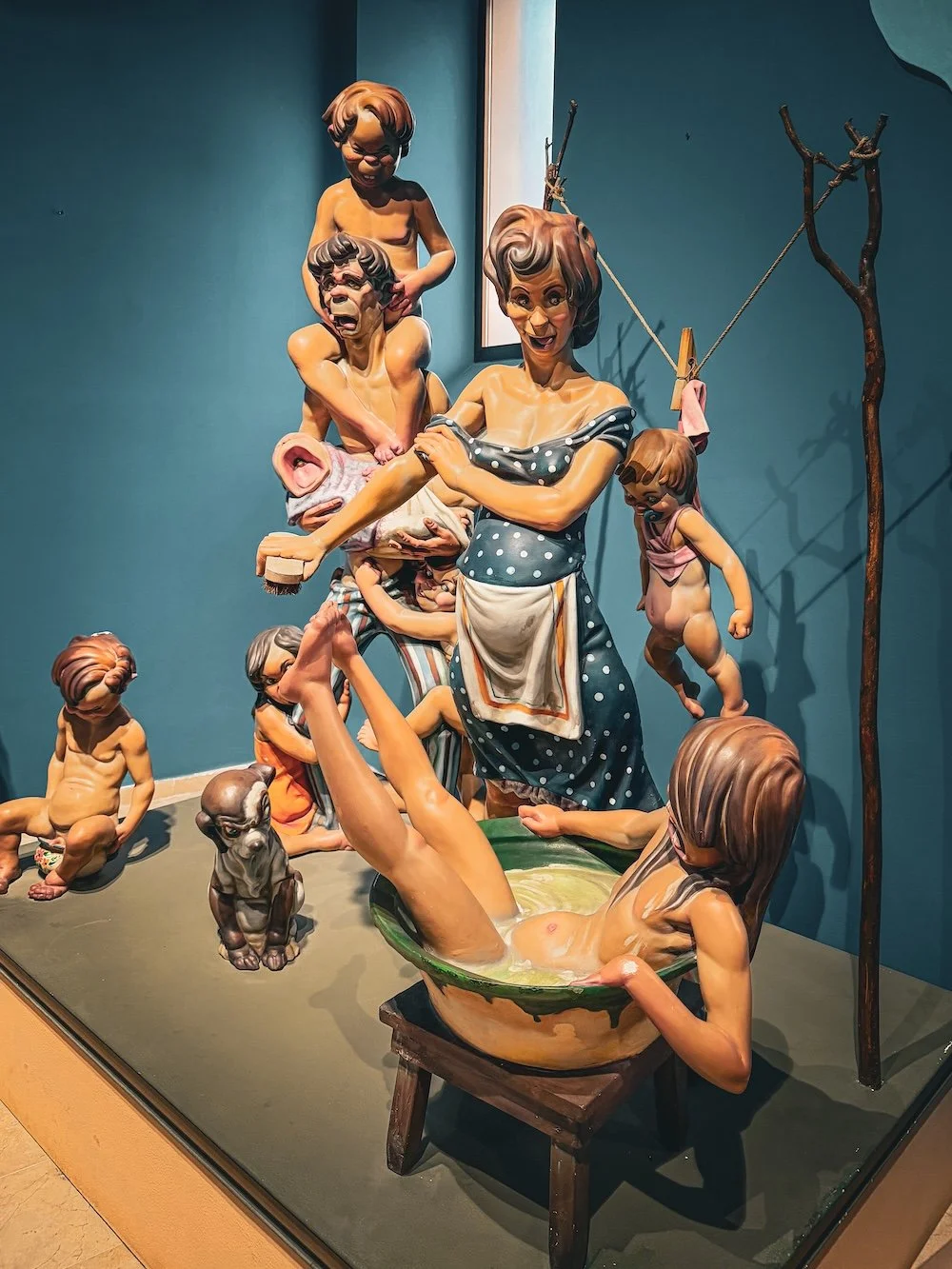
The Punishment of Being Too Many, 1961
That's what the museum holds: not the most beautiful or the most expensive sculptures, but the ones that the people looked at and said, "This one matters. This one needs to be spared.”
What the Festival Reveals About Change
I went to bed that night completely spent, the smell of gunpowder still in my hair, and woke up the next morning thinking about impermanence.
The festival has a structure. And that structure mirrors, almost accidentally, the way change happens, whether that be social change or significant life transitions.
There is a completion phase. The artists finish their work and hand it over. Their year of building is done. It belongs to the city now. Something is complete, and they must leave it behind, even if leaving doesn't feel easy yet.
There is a messy middle. The display, the voting, the mascletà, the street parties, the burning. All of it is happening at once. Loud, contradictory, beautiful, impermanent. You can see what exists. You can vote on what to spare. But you can't stop what's coming, and honestly, you wouldn't want to.
And there is the emerging, the morning after the cremà. I picture streets swept, and burnt remains cleared. Spring begins. Not despite the burning, but because of it.
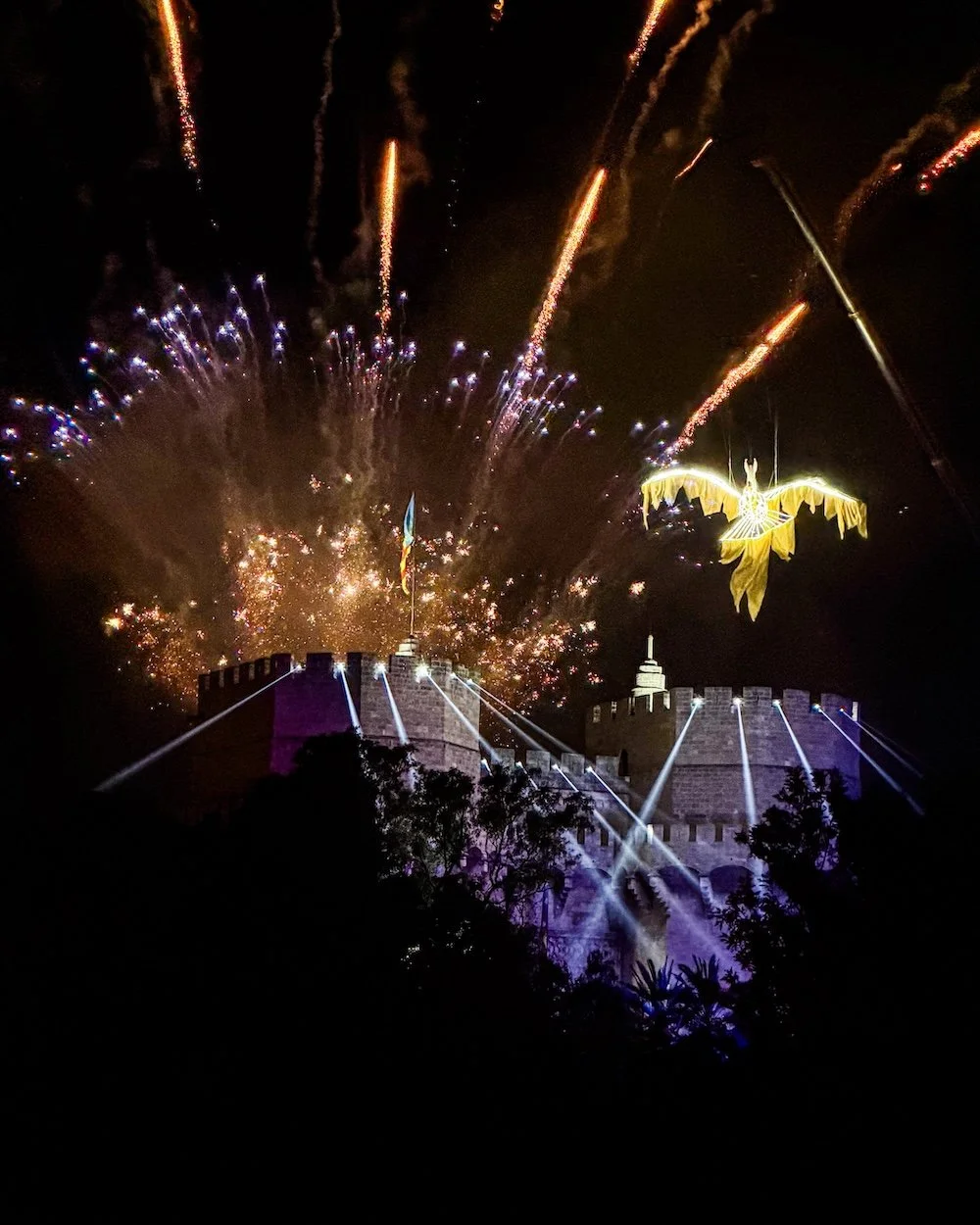
What I didn't expect was how celebratory it all felt. Not mournful nor maniacal. It was loud and warm and full of patio table-sized paella and marching bands and family and friends who have done this together every year of their lives.
And that's worth repeating: every year. Las Fallas isn't a one-time reckoning with impermanence. It's a scheduled one. Valencia doesn't wait to be ready for change. It puts it in the calendar. It builds a festival around it. It shows up in matching colours and dances in the street and does the whole thing again twelve months later.
Maybe that's what Las Fallas gets right about transition that the rest of us sometimes get wrong. We treat it like something to endure. Valencia treats it like something to celebrate.
A question persists in my heart from Valencia, not just about Las Fallas, but about the cycles in my own life and probably yours too.
What would you save?
Not what you're obligated to keep, not what other people would expect you to hold onto. But what, if you had one vote, would you choose to carry into the next chapter?
Worth asking. On the verge of any season change. Any new year. Any birthday with a zero in it. Any morning when something feels like it might be finishing, and something else might be about to begin.
If Las Fallas and Valencia is calling you, here are a few things worth knowing before you go:
Las Fallas runs annually during early March in Valencia, Spain, with the festival launch at the end of February and the burning mid-March.
I was there for La Crida, the opening celebration on the last Sunday of February. If you want the full arc of the festival, plan for the week in and around mid-March. If you want the opening energy with slightly smaller crowds, late February is a quieter and still an extraordinary entry point. Check the official website, as dates change a bit every year.
The mascletà, a daily rhythmic pyrotechnic display focused on sound and vibration, takes place every day at 2 pm in Plaza del Ayuntamiento. Plan your whole day around it. Arrive early for a comfortable place to watch. We ended up along a fenced fountain, which gave us something to hold onto and, as a bonus, a cooling mist every few minutes. It is a 120+ decibel experience, so bring earplugs for the mascletà if you're sensitive to sound.
Book accommodation months in advance. The city fills completely, and prices reflect it. We lucked out by using a home exchange (read more about that here).
The Fallas Exhibition at the City of Arts and Sciences is where you get to vote on the ninots. Open mid-February to mid-March, before the official judgment and burning. Don't skip it.
A VoiceMap audio tour is a great way to navigate the city and the festival with context. We did one in Valencia, and it added a layer to the experience that we'd have missed otherwise. We chose the one titled Between Two Gates, find it here.
The Fallas Museum is open year-round and worth visiting even outside festival season. The spared ninots and their stories are worth an hour of anyone's time.
For a more intimate experience of the burning, consider watching the neighbourhood fallas cremà in the side streets rather than only the main city centre event. The scale is smaller. The feeling is bigger.
Eat paella while you're there. Valencia is the birthplace of this famous dish.
Valencia itself is worth visiting in any season. But Las Fallas is something else entirely.
This is what I write about. Let’s stay connected.
Not sure what kind of travel you need right now?
My quiz takes about two minutes and might tell you something useful.