
One Step at a Time Isn't a Cliché When It's All You Have

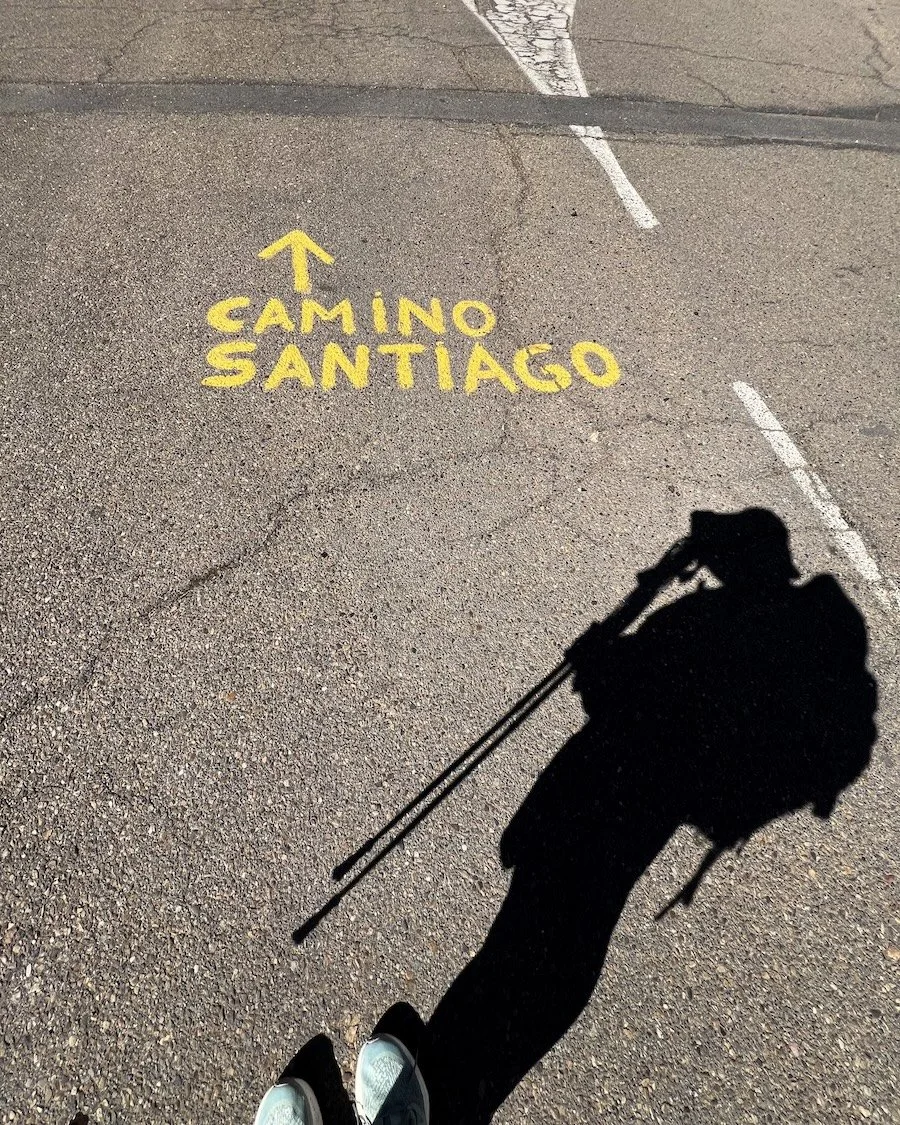
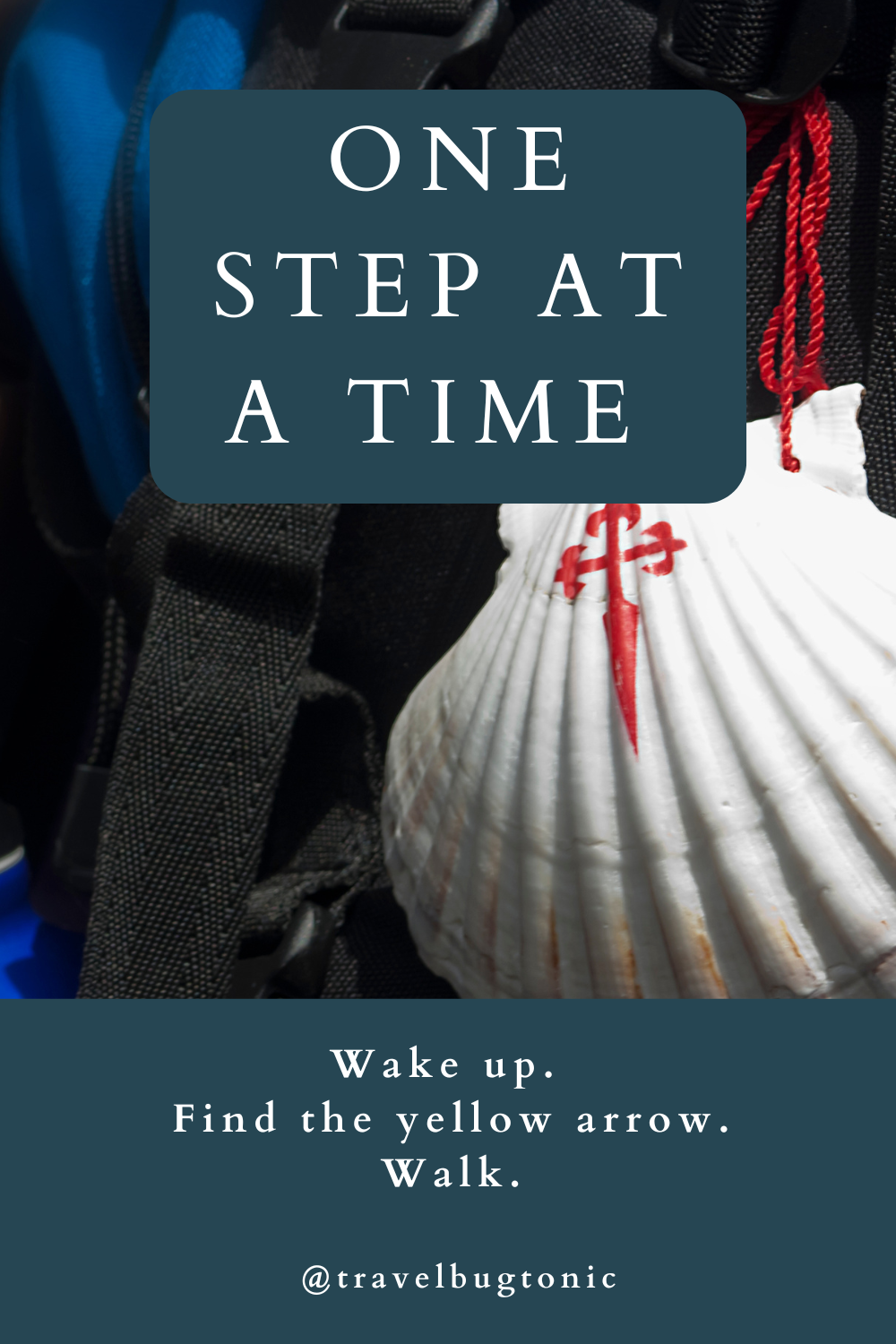
Wake up. Find the yellow arrow. Walk.
That was the plan…every day, for sixteen days.
I never had to decide where to go next, because there wasn't a next to decide. There was just forward, marked out in faded yellow paint on whatever surface happened to be available. A rock. A tree. The side of someone's barn.
My job was to find the arrow. Then find the next one. That was it.
Somewhere around day three or four, the days started to blur together. Not boring, but like white noise, if white noise could also be beautiful. The same questions, answered the same way, every morning. Where's coffee? Which way? How are the feet? The same small management tasks. Wash this, pack that, eat something, drink more water than feels necessary. And underneath all of it, a low hum of just... walking. Being outside, noticing things, and feeling, more than once a day, genuinely struck by how beautiful a hillside or a doorway or a particular shade of green could be.
I wasn't planning anything. I wasn't optimizing my day. I was just walking toward where I'd sleep that night, and somewhere in the repetition of that, something in me settled that I didn't even know was unsettled.

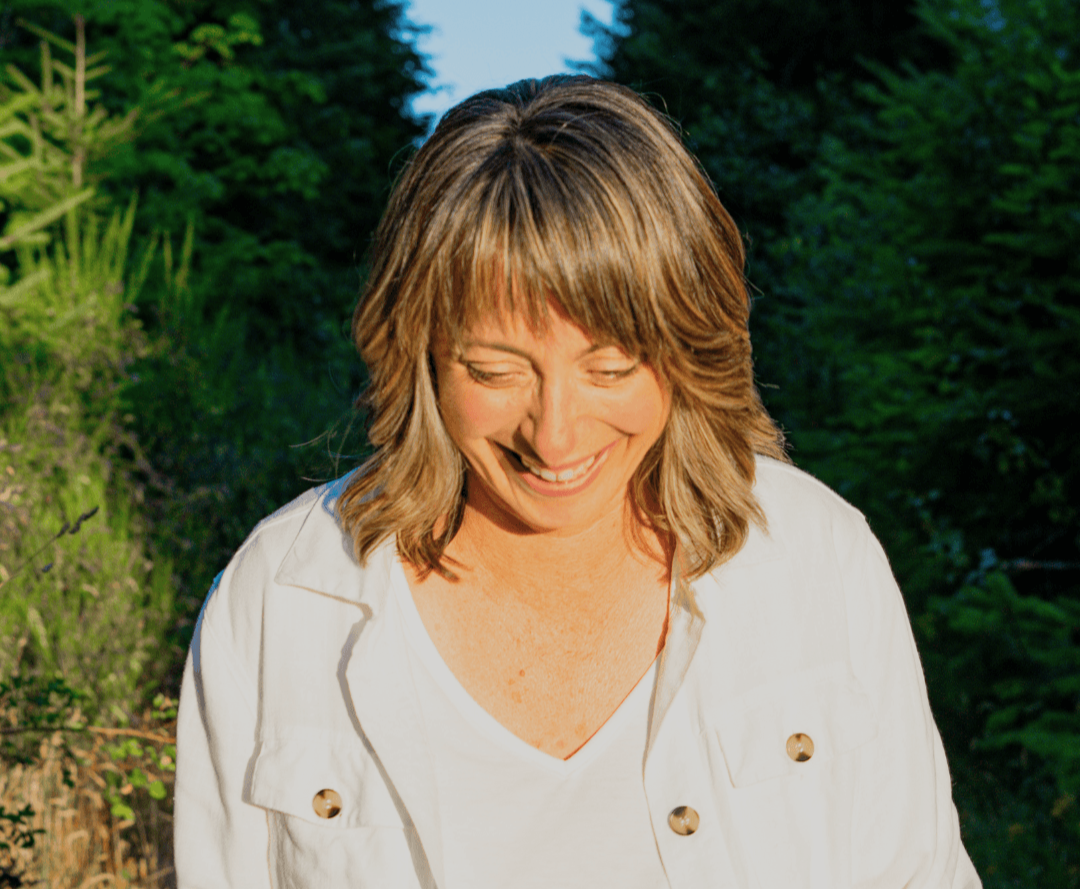
I almost didn't go.
My father was unwell, and for a long time, the trip sat in that uncertain category of things that might or might not happen. Then he told me to go. Firmly, in the way he said things when he meant them. So I went.
Before I left, we set up Polarsteps on my phone and his iPad. It's an app that tracks your route via GPS and shares it in real time, which meant that for sixteen days my father could follow every one of my 350 kilometres from his armchair at home. To within a few hundred metres, he always knew exactly where I was. Each morning, the little dot moved forward on the map. Every evening, I sent him photos and a written recap.
What My Nervous System Knew Before I Did
The Camino has a reputation for being a lot of things. Spiritual. Physically punishing. A threshold experience. People walk it in search of something, and a surprising number of them find it (or something, anyway). I'd read the books, researched the idea of pilgrimage, and knew the stories.
What I didn't expect was how profoundly repetitive it would feel. And how much I needed that.
There's actually a name for what the Camino's rhythm was doing to my nervous system. The alternating left-right movement of walking is the same mechanism used in trauma therapy called EMDR. It engages both hemispheres of the brain in a way that gradually reduces stress and emotional intensity. Neuroscientist Andrew Huberman has noted that forward movement specifically signals safety to the brain. Not metaphorically. Physiologically. When you're moving forward, then, your nervous system registers safety, not danger.
My days on the Camino had this shape, and the predictability held me.
A Day on the Camino Francés
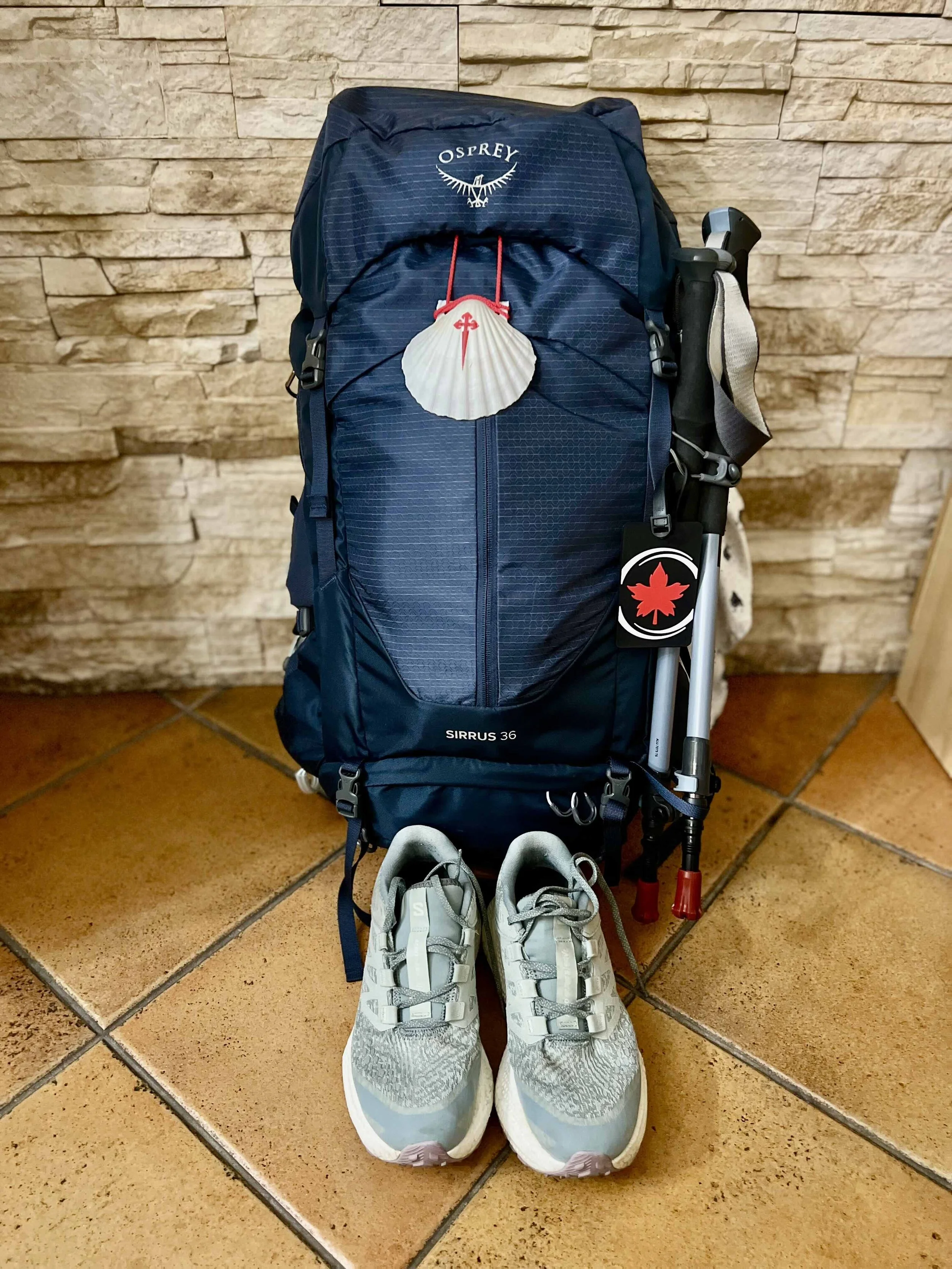
Mornings started already dressed, because I quickly stopped seeing the point of pyjamas. Vaseline on the feet first thing (non-negotiable, not glamorous, and I will preach about this to anyone who listens). Then pack up and go find an open bar for a café con leche. Every day, coffee is a highlight.
After that, walking. The yellow arrows of the Way would appear when I needed them, and every so often exactly when I really, really needed them. A snack on a bench somewhere along the way. More walking. Eucalyptus in the air, cowbells jangling across the fields, layers of merino wool coming off as the morning warmed into afternoon. By the last five kilometres, I'd be scanning for anywhere that might sell a cold cerveza con limón, which became its own daily ritual.
Arrival, eventually. Shower, laundry, feet up, maybe a few lines in the journal if there was anything left in me. Laughter with dinner as we recounted the day or made connections with other pilgrims. Lights out by ten.
Then repeat.
Life holds complexity, and I had brought some of that with me. But the Camino didn't have much room for it. There were very few decisions to make beyond the next kilometre, the next café, or whether to push through or stop. And the physical exertion didn’t leave much room to think about other things. That turned out to be an extraordinary relief.
(I've written about this trip before, in more detail — the full story is here, and if you're considering your own Camino, this one might be useful too. Plus, I share a great list of books that prepared me, if you're curious.)
The Agreement We Made Before We Left
I walked with two women I trusted. Before we left, we'd agreed to communicate honestly about what we needed, and that we'd support each other without smothering each other, which is a harder agreement to keep than it sounds when you're tired, your feet hurt, and someone’s navigation is possibly not as reliable as she thought. (Mine. I mean mine.)
What actually happened was one of the better things about the whole trip.
There were days when I was the solid one. When one of them hit a wall, physical or otherwise, I could simply be steady beside her. And there were days when I was the one who needed holding; when I’d get turned around and frustrated with navigation, or when the weight of what I was carrying felt heavier than my pack. They were just there. No fuss. No fixing. No judgement.
Why the Camino Is a Good Place to Think Something Through
Somewhere at the end of the first week, I fell into step with a woman walking alone. We walked together for an hour or so, the way you do on the Camino, strangers becoming temporary companions starting with “Buen Camino.” She told me about a decision she was facing at home. A real crossroads. She was working something out with every step, mid-story, mid-life, mid-change, and sharing bits with someone who wasn't in it with her was helpful.
There's a Stanford study that helps me make sense of why this felt natural. Researchers Oppezzo and Schwartz found that walking increases creative thinking by around 60 percent compared to sitting, and that it's the walking itself, not the scenery, that does it.
She wasn't trying to think her way through it. She was walking it through.
I listened. I asked a few questions. I noticed, somewhere along that path, that I could be fully present for her turbulence without being pulled into it myself.
What I Actually Needed
By the end of sixteen days, my pack felt like part of my body. I knew exactly where everything was (clothes, silk sleeping liner rolled tight, a spork I never used). The weight of it was familiar in the best way. And the path, too, for all its variety, remained the path. While the scenery was breathtakingly beautiful, the yellow arrows were constant.
I think that's what I needed more than anything. Not newness. Not a challenge to rise to. A reliable rhythm I could walk and carry what I was carrying.
Coming Home
I came home steadier than I left. Not changed, not transformed in any dramatic sense. More like myself, actually. More patient. Less inclined to fill the silence.
The steadiness came first. What I did with it came later.
A few months after I got home, I finished building the Pilgrimage Primer, a 21-day guided journey for women who are ready to look at what's next but aren't quite sure how to begin. The Camino wasn't that for me. The Camino was the thing that made me ready to ask the question. There's a difference.
My father tracked all 350 kilometres. Every path, every village, every morning that I set out before the sun was fully up. He just watched the little dot move forward from his armchair.
I still think about that a lot. Attachment researchers would call it felt security, the way being witnessed by someone who loves you, even from a distance, even in silence, steadies us in ways that are as real as any physical comfort. Maybe that was part of what I was walking back toward all along.
One Trail, More Than One Need
What I've described here is one version of the Camino. Mine. The rhythm, the predictability, the removal of decisions. That sense of GroundedTravel is what I needed, and that's what it gave me.
But the Camino (or other long-distance walking journeys), quite honestly, can satisfy more than one kind of travel need.
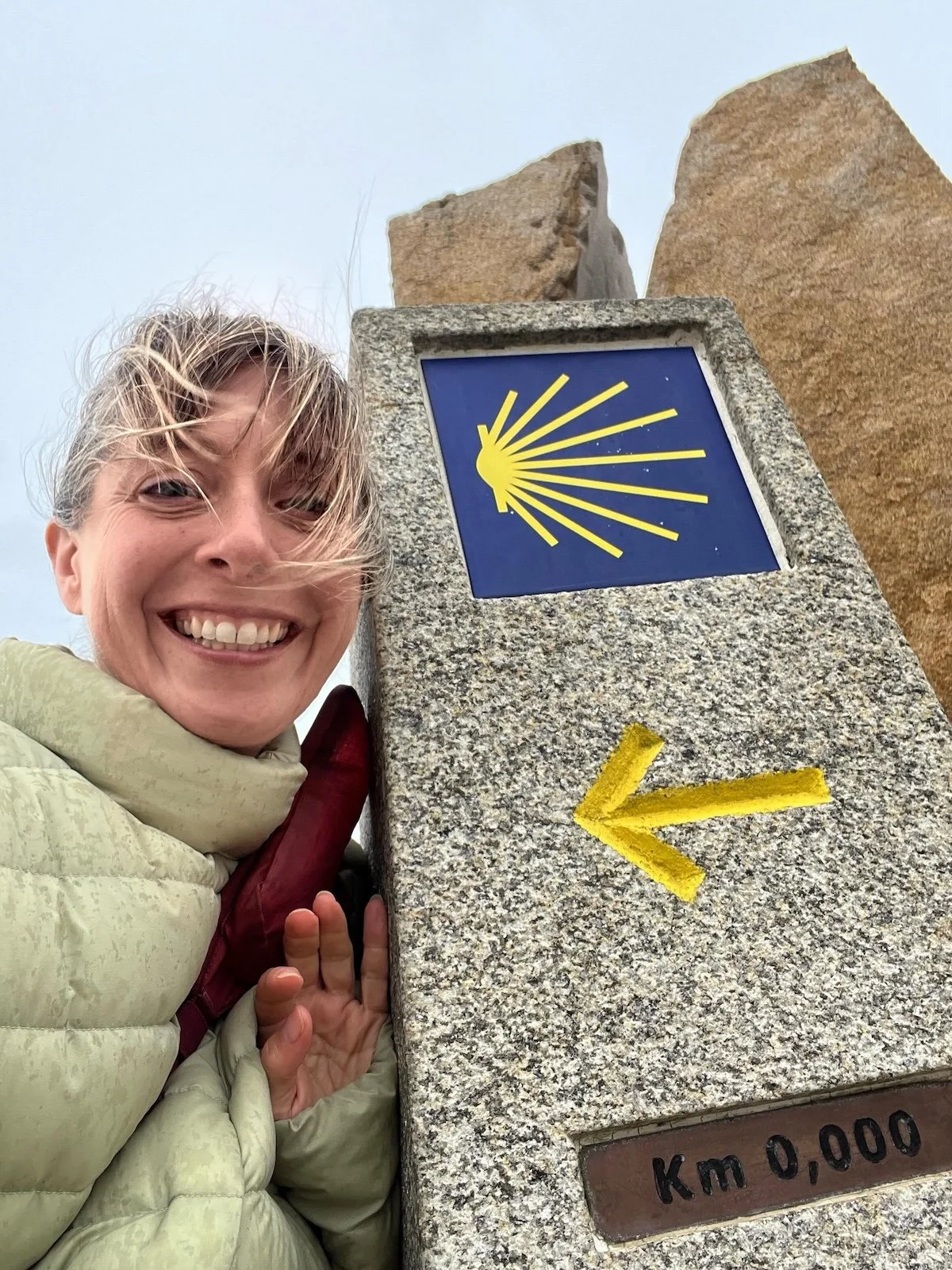
For the woman I met somewhere in that first week, the one processing a real crossroads with every step, the Camino was doing something different. It was giving her a threshold to walk across. Not the literal one at the Cathedral of Santiago de Compostela, but an internal one. She wasn't seeking steadiness, but her own permission to change. The walking, the distance, the anonymity of being someone's stranger, all of it gave her the conditions to figure out what she actually thought. That's a Transitional need, and the Camino served it beautifully.
For someone arriving with more energy than uncertainty, who wants to push farther than they thought they could, who is hungry for new conversations and a very new way of travel, there's something Expansive about the Camino too. The sheer physical accomplishment of it. The strangers who become new friends. The 60% creative-thinking boost from walking isn't just useful at crossroads but also for thinking bigger.
And then there's the person who arrives already knowing what they went through. Not processing it, not running from it. Just needing a place where experience can settle. Where the multiple threads of life stop fighting for priority and start making sense, that's Integrative travel. The Camino, with its long, quiet hours and its enforced simplicity, is a wonderful container for sense-making too.
Restorative Travel is the one I'd be careful about. If you're genuinely depleted, and what you need is to be held gently, a demanding physical pilgrimage might not be the match. The Camino gives a lot, but it also asks a heck of a lot.
Knowing what you need changes how you show up for any trip, including this one. Take the quiz. It'll point you toward the kind of travel you need right now.
This is what I write about. Stay Connected!
Sometimes the best thing is a thinking partner. If you're ready to get serious about a trip, a transition, or both, a one-on-one coaching session is where we start.