The Traveller at Home: A Day in the Life

I write a lot about noticing.
…about curiosity as a travel practice… about the awe-muscle and how it needs regular exercise to stay in good shape… about how mindful seeing, the art of paying close attention to what is actually in front of you, changes the quality of a journey. I believe all of this. I've written about it in the context of European cobblestone streets, foggy coastlines, and Camino trails.
But the thing about this awe-muscle: it only stays strong if you also use it when the scenery isn't as particularly inspiring. When you're not in Portugal. When there is no cathedral, no olive grove, and no moment of arrival in a new city.
So I also practice noticing at home. On ordinary days. On days when the most exotic thing on the agenda is a Moka pot, a forest walk, and a desk that looks, to outside observers, a bit chaotic.
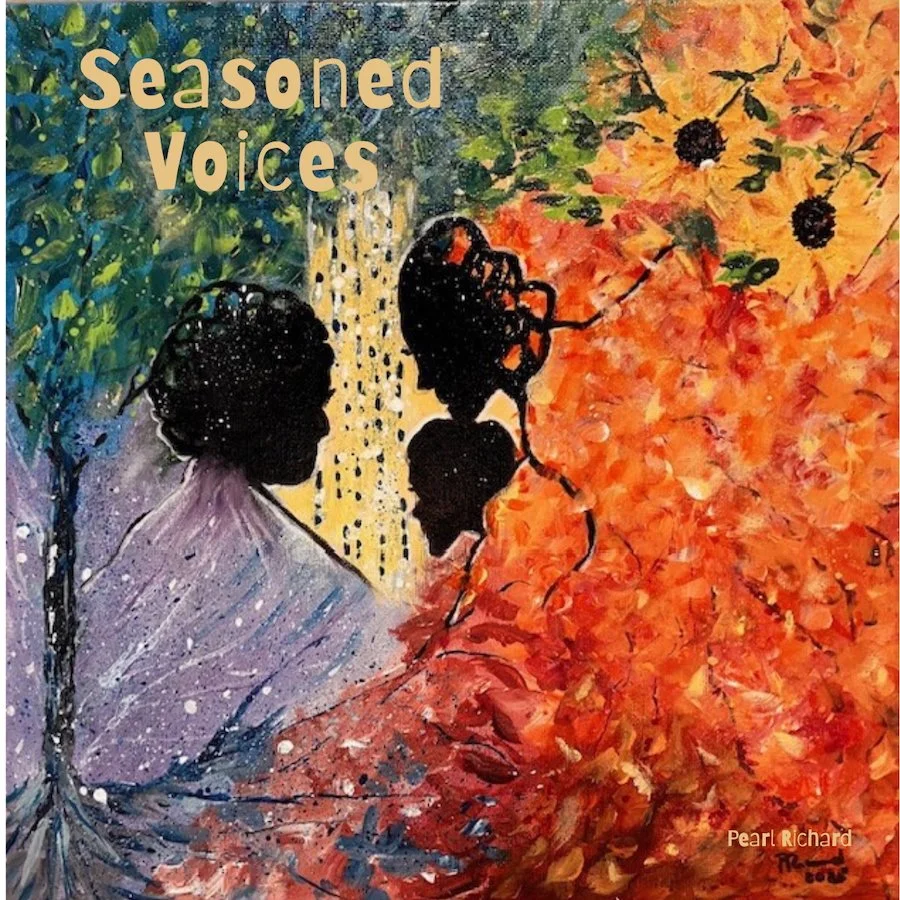
A Seasoned Voices Reflection
The five bloggers of Seasoned Voices are bringing you "a day in the life" theme. I could have morphed it into a travel story. I decided not to. Because I believe that a life well-noticed doesn't require a destination. And I wanted to show you what that actually looks like, on a regular Thursday, in a small city on Vancouver Island, with a rooster as the opening act.
Consider yourself warned.
6:15 am: The Moka Pot. The Maple Tree. The Rooster.
My morning coffee is a Moka pot ritual. Three shots of espresso, a beautiful mug, and I drink it in bed.
I am not ashamed of this. I consider it one of the better decisions I make on a daily basis.
In spring, my bedroom window frames a maple tree so full of songbirds in the early morning that it genuinely competes with whatever book is in my hand. Beyond it, the neighbour's horse grazes in the field. If I'm awake early enough (which I tend to be), the sky shows its sunrise colours in a way that feels almost aggressive in its beauty. And somewhere nearby, a rooster holds forth with the confidence of someone who believes the sun rose specifically because of him.
The morning is my most creative time. Ideas surface fast in those first hours before the day has made any demands, and words fall into place that would cost me three times the effort at 2 pm. Some mornings, there is a book. Some mornings, my laptop, because the ideas will not wait, and I have learned they are a gift.
I am a fast drinker. The last sip of the mug arrives with a small resigned sigh, already looking forward to tomorrow's. I rarely have a second cup. It never quite tastes the same, and I would rather hold the first one in memory, intact.
This, I have noticed, is also true of travel. The first morning in a new place, the light you don't recognize yet, the sounds you can't quite place, has a quality nothing else can replicate. You can't go back and have it again. You can only be awake for it while it's happening.
Soon After: Into the Forest
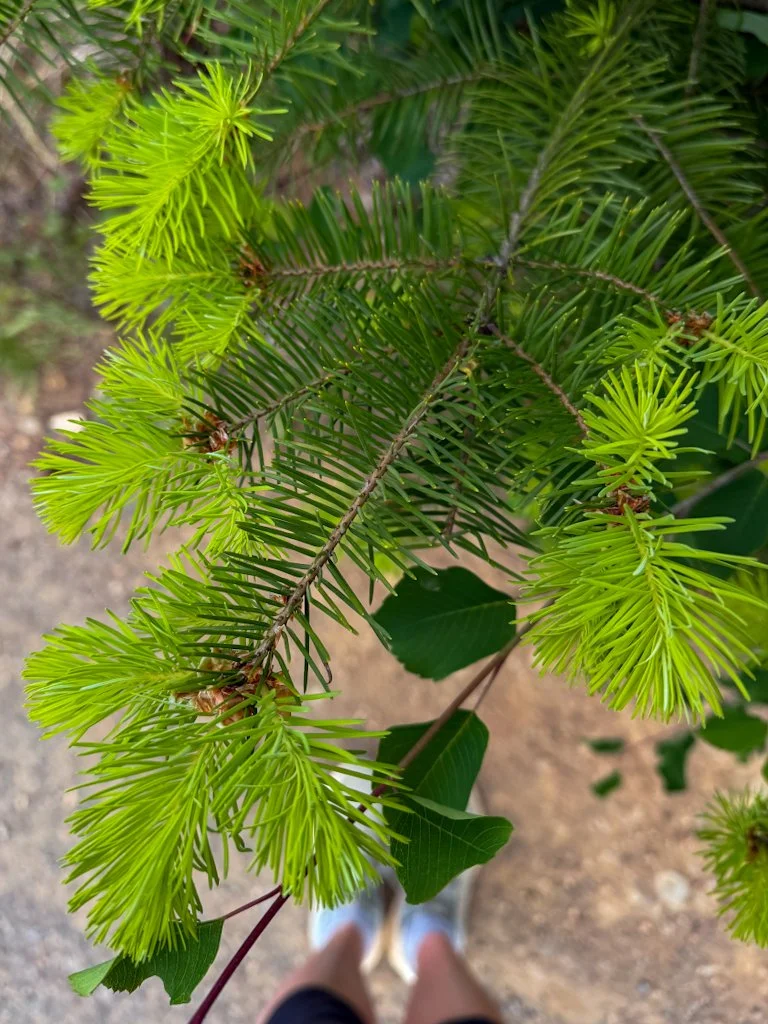
Most mornings, I am out the door not long after coffee, trail shoes on, heading into the trees. This is where glimmer-noticing becomes genuinely problematic for forward momentum.
Right now, the forest is doing so much. The Douglas Fir trees have new green tips, impossibly bright against the older growth. Trilliums are gone, but the honeysuckle is everywhere, and foxgloves are close behind. The creek is talking loudly after the winter melt, releasing a damp earth smell that makes you stop and breathe deliberately, because you know it will not last. And the bears are back, Mamas with cubs in tow. I know because the evidence is there on the trail, which adds a particular alertness to morning walks.
I think this is one of the things travel does for us, too. It puts us in situations where ordinary alertness isn't enough. You can't sleepwalk through a new city, a trail you don't know, a menu in a language you can barely decipher. You have to pay attention. The stakes of noticing go up.
Travel Bug Tonic was built, really, on this same instinct: the belief that paying attention is the beginning of everything. That you do not need a trip to feel the particular aliveness of being somewhere with your eyes genuinely open. The forest does for me in forty-five minutes what some trips take three days to unlock.
Back Home: The “Work” (Quotation Marks Entirely Intentional)
I have worked from home as a consultant and entrepreneur for decades. This means I have rarely, in recent memory, worried about packing a lunch, ironing office wear, or making small talk in the staff room. This remains one of life’s gifts.
What it also means is that the work looks, from the outside, deeply suspicious.
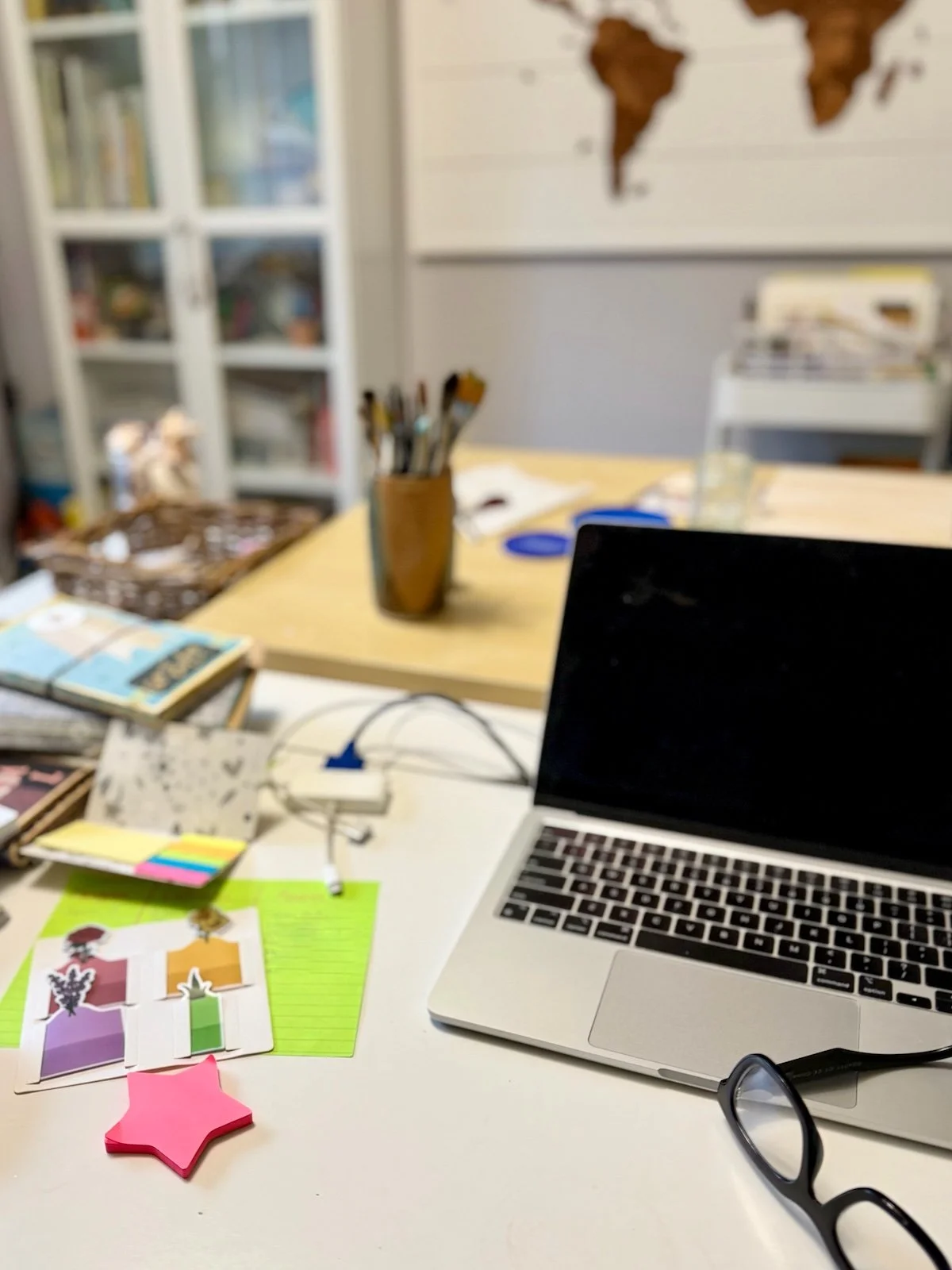
My writing desk faces my painting table. The painting table is used less often than I would like, more fantasy than reality at the moment, but it faces me while I’m on the computer, and I find this inspiring in a way I cannot entirely explain. Possibility, maybe, a reminder of what is waiting.
The desk itself is a system that makes complete sense to me and to no one else: piles of notebooks, sticky notes in several colours, pens also in several colours because colour is information. There are approximately a gazillion browser tabs open. I am researching, I promise. The ones that have been open for six weeks are definitely still relevant.
I write slowly, and I rarely work on just one thing at a time. I tend to have several projects on the go, returning to each at different stages, giving my brain time to see the words in a new way. Often, I come back to something and realize it needs more: I have been too concise, leaving gaps where the reader needed context. Other times, I return and find I have tangled things up, and spend the next few sessions untangling and simplifying what I have overcomplicated. Both directions take days. Both are part of it.
Writing is also only part of what I make. There is my love of Canva, photo editing, and my website. The work is visual as well as written, and I move between them in whatever order the day suggests. Some days I write mid-morning. Some days it is after breakfast, when something from the walk has worked itself into an actionable idea. I do not force the schedule. The writing tells me when it is ready.
I am, I will admit, easily pulled sideways by email. I am quick to reply, which I know is not always the most productive habit, but an answered email has a satisfying finality that a half-written paragraph does not. And occasionally the bing of a text brings a new photo of my granddaughter, which stops everything completely and without apology.
And every so often, my husband pops his head in to say hello, or drops a kiss on my cheek, and I am pulled briefly and completely out of whatever I was doing. I count this as a glimmer every single time.
What I Actually Noticed Today
A partial and probably incomplete accounting:
The sky at 6:15 am, that particular shade of pink that appears for about four minutes in spring and then is simply gone.
The maple tree is full of a songbird choir.
The rooster, announcing the morning to no one in particular and everyone within range.
The moment on the trail when I realized the cold had loosened its grip on the early morning air. Not warm yet. But no longer bracing.
A paragraph of my own that finally said what I had been trying to say for three drafts. That small, quiet click of rightness. The writer's version of turning a corner in an unfamiliar city and suddenly knowing where you are.
My husband's face, appearing around the door in the afternoon, in the particular way he has of looking at me that I hope I never stop noticing.
The golden hour light at 7 pm making the whole room feel like there had been a set change onstage. Same furniture, different world.
A reference in a Netflix film that I had just read about in my novel. The small thrill of two unrelated things suddenly rhyming.
Eight, in total. On a day I barely left the property and sat too long at my computer.
The Same Practice
I started this morning, as I start most mornings, mug in hand, nature performing outside the window, wondering what I would notice today that I had missed yesterday.
It is a question that organizes me more than any to-do list ever has. It is at the heart of why I travel, why I write, why I stop mid-sentence when something catches my eye. Not because I am chasing awe in any grand sense. But because I have found that glimmers are everywhere, quietly available, endlessly renewable if you stay curious enough to look.
The practice of slow travel and the practice of a well-lived day at home are, it turns out, the same practice. It's the quality of attention that determines the quality of the experience, not the passport stamp.
Tomorrow the sky will offer a new shade of morning. The light will hit from a new angle. There will be something on the trail I have not seen before.
I’ll be watching.
What was your glimmer today? (share in the comments!)
Seasoned Voices brings together five women writers,
each responding to shared themes through the lens of her own life and lived experience.
We begin with the same quote, question, or idea, and then follow where it leads us individually. The result is a set of reflections that speak to aging, identity, and possibility from different angles.
Below, you’ll find links to the other Seasoned Voices essays inspired by this same quote. I invite you to move between them, noticing where our reflections echo as women, where they diverge, and what they stir in you.