
More Than A Holiday Could Hold: A Second Look, A Third Visit
A story about hunger for the world, and what happens when you give curiosity some space.
I was nine years old the first time I understood what it felt like to want more of the world than a holiday could hold.
My father was posted to London, and for two years, England was just where we lived. This was not a holiday, but the place where I knew which tube stop would bring me home and which park felt most like my personal playground (it happened to be a local cemetery!). Foreign, but not visiting.
That feeling sparked something in me that never really settled. I've been chasing it ever since. I just didn't know how to feed it properly until I had ten weeks in Spain and Portugal to help figure it out.

The first thing freedom felt like was pressure
When my husband, Greg, retired, something big shifted in our home. For the first time in our adult lives, there were no external time limits. No return-to-work date. No carefully rationed vacation days. I’ve mostly been an entrepreneur and consultant, so I was accustomed to flexibility.
For Greg, this was a threshold moment and a step into a new chapter, but for me, it felt different. I'd been building toward this kind of freedom for years. I was ready to bloom. There was an actual charge to it. Not just excitement, more like the feeling of having been still for too long and finally being allowed to move.
I told myself we were running an experiment. Partly because that's genuinely how I think about travel: as a place to try things, notice what happens, learn something I couldn't have learned at home. And partly because "experiment" granted permission not to have all the answers. If something didn't work, that wasn't failure; it was data.
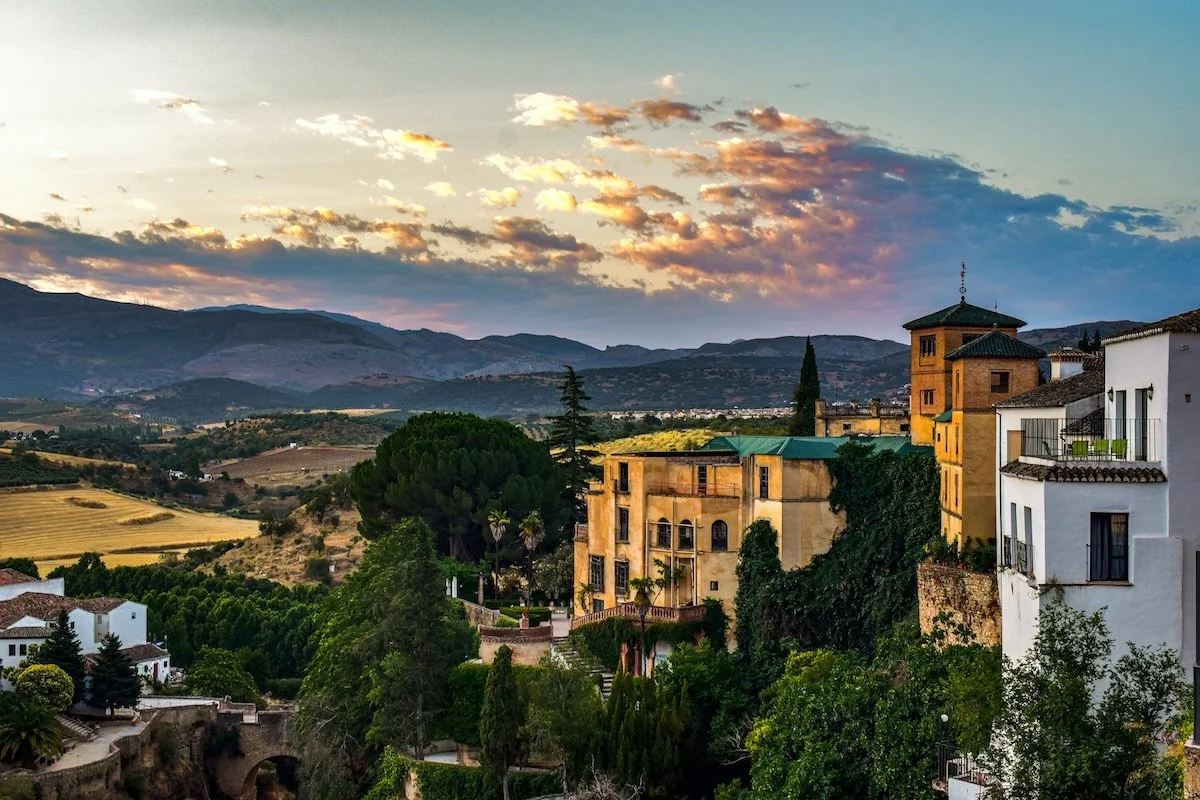
I had done a lot of research leading up to this trip, but I forced myself to keep the research as a reference rather than a blueprint. When we finally arrived in Sevilla, the first of four weeks was quietly unsettling. I'm a planner by nature. I notice things, map things, and like knowing roughly what the day holds. And here I was, in a beautiful city, with nowhere I had to be.
It took longer than I expected to exhale. But when I did, when I stopped scanning for what we should be doing next or what we might be missing, something opened up.
A Second Look, A Third Visit
Most of our trips before this had been three weeks of moving frequently. Two nights here, three nights there. Optimized for coverage.
This trip was the first time we'd committed to staying long enough to actually get bored and then discover what was on the other side of bored.
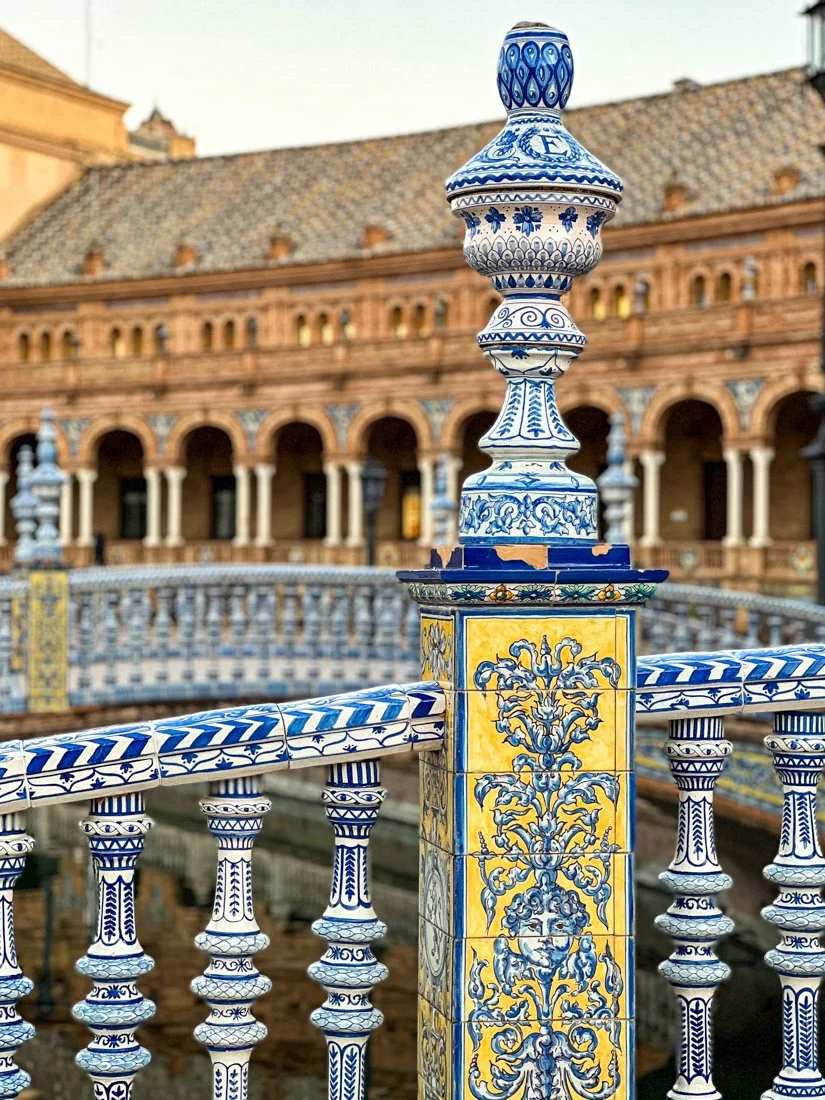
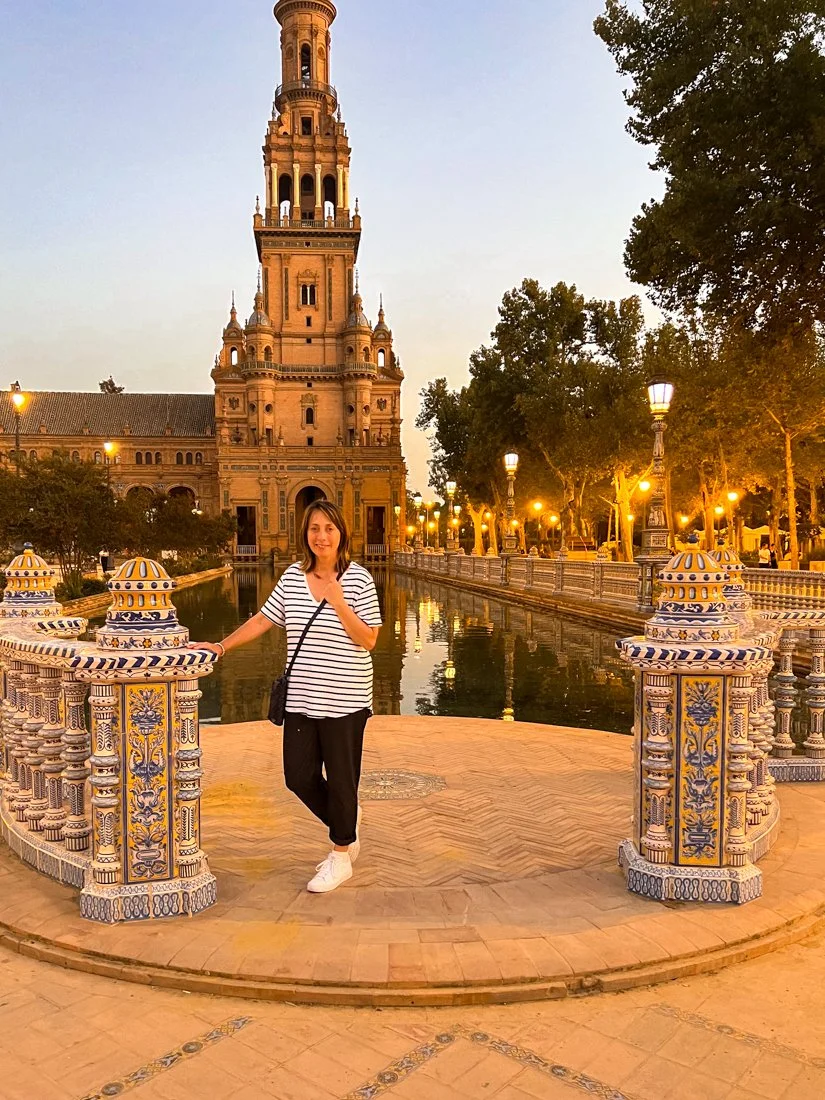
Plaza de España helped us understand what that meant.
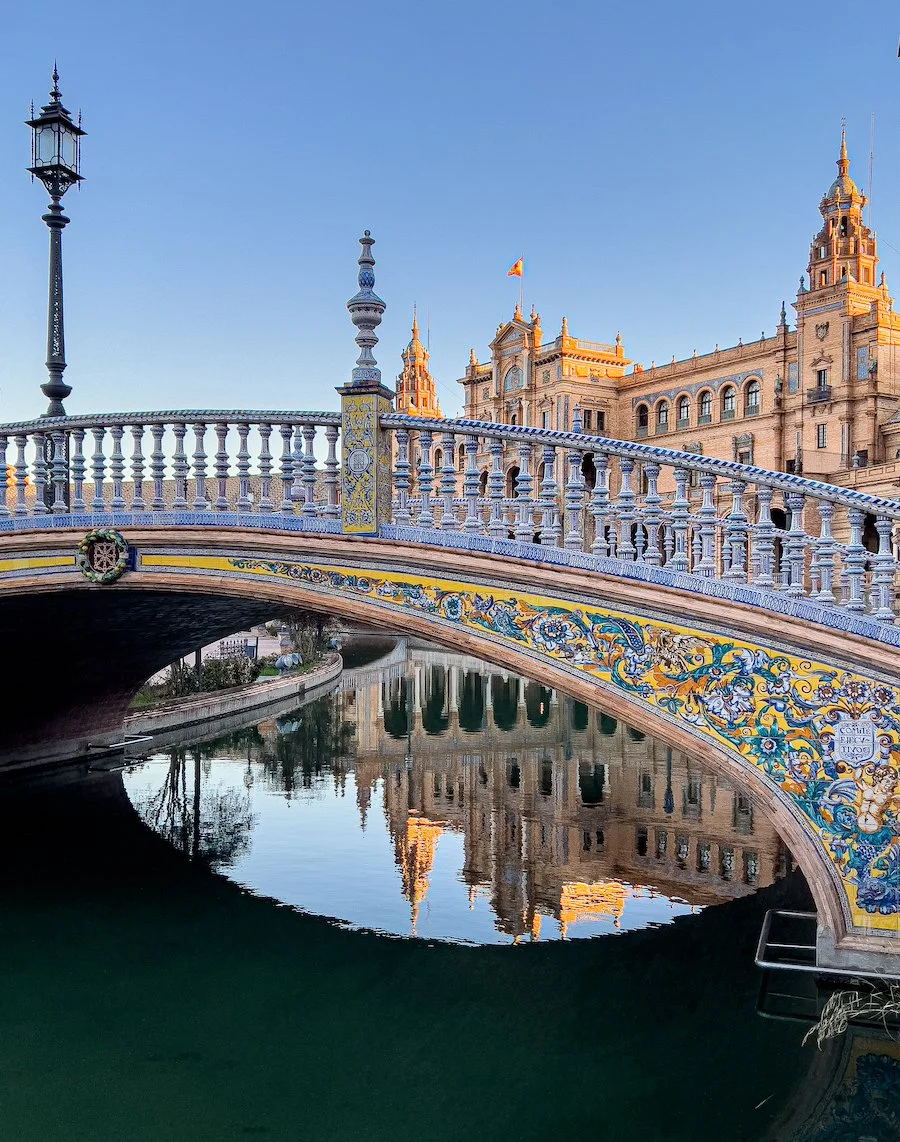
We went the first time because it was on the list of “must-sees.” Magnificent, a sweeping semicircle of tiled bridges and ornate towers built for a 1929 World's Fair, still a hub of activity with horse-drawn carriages, pleasant gardens, and an air of elegance. The second time we went, we weren't ready to be done with it. There is a lot to soak in. The third time we went at sunrise, before the tour groups arrived, and watched the city wake up. The light was different. The fountains sounded different. We were almost alone in this enormous space that had been full of strangers twice before, and it felt, briefly, like it was ours.
That third visit was one of those moments where I felt genuinely lit up by the place and the thrill of creating an experience. There's a difference, and I hadn't always known how to find it.
I noticed the same instinct at the Alhambra in Granada. We first arrived at sunset and stood, overwhelmed in the best way, at the layers of Moorish architecture, gardens, fortress walls, all of it holding centuries of history I was only beginning to understand. We returned the next morning at sunrise to go inside. The second visit was calmer, richer. I knew what I was walking into, even if its beauty continued to blow my mind.
Sintra was another experience that most people cram into a one-day trip. We went twice, not because we had extra time to fill, but because we couldn't not go back. We knew what we'd missed, what we wanted to linger over. We arrived with intention and awareness instead of just hope.
I started to notice a pattern in myself: I like to go back. I want the second look. I need to follow what caught my attention the first time and see where it actually leads.
That's not a travel style. That's curiosity doing its work.
When Curiosity Became a Future Direction
Standing inside the Royal Alcazar in Sevilla, I continued to marvel at the intricate geometric tilework, the carved plaster ceilings, and the reflecting pools. I felt something I hadn't expected: a pull toward the culture that built this. The Moorish influence in Andalucía was entirely new to me. Spanish history isn't covered much in the Canadian school curriculum, and eight centuries of Islamic civilization on the Iberian Peninsula had been completely invisible to me until I was standing inside it.
Afterwards, I read books. I asked questions. I followed my curiosity to learn about the Moors in Spain. It wasn’t that I decided to learn about it. I found I just couldn't stop. That's the difference I've come to recognize between a passing interest and the real thing: you don't manage a spark; it can consume you.
Two years later, that same curiosity led me to Morocco. I didn't plan it that way. But that's what happens when you follow something long enough: it opens into something you couldn't have imagined from the starting point. In fact, I went to Morocco twice. Each time I came home with the same feeling I'd been chasing since I was nine: that the world is so much bigger and richer than I still understood, and that there was still so much worth finding.
That's what this trip taught me about an appetite for the world. It doesn't need to be managed or rationed. It needs to be followed with enough intention to know which sparks are worth staying with.
This is what I write about. Let’s stay connected.
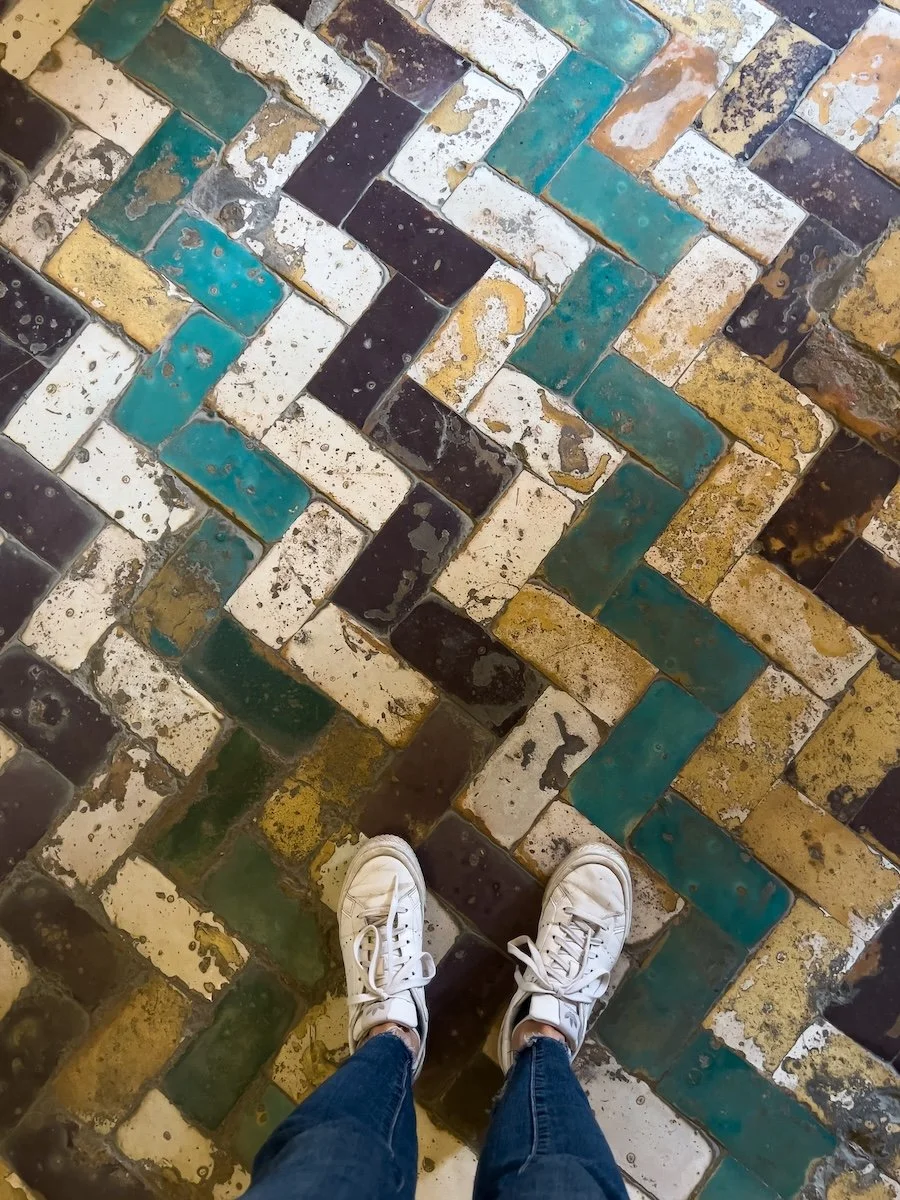
Inspired in Seville
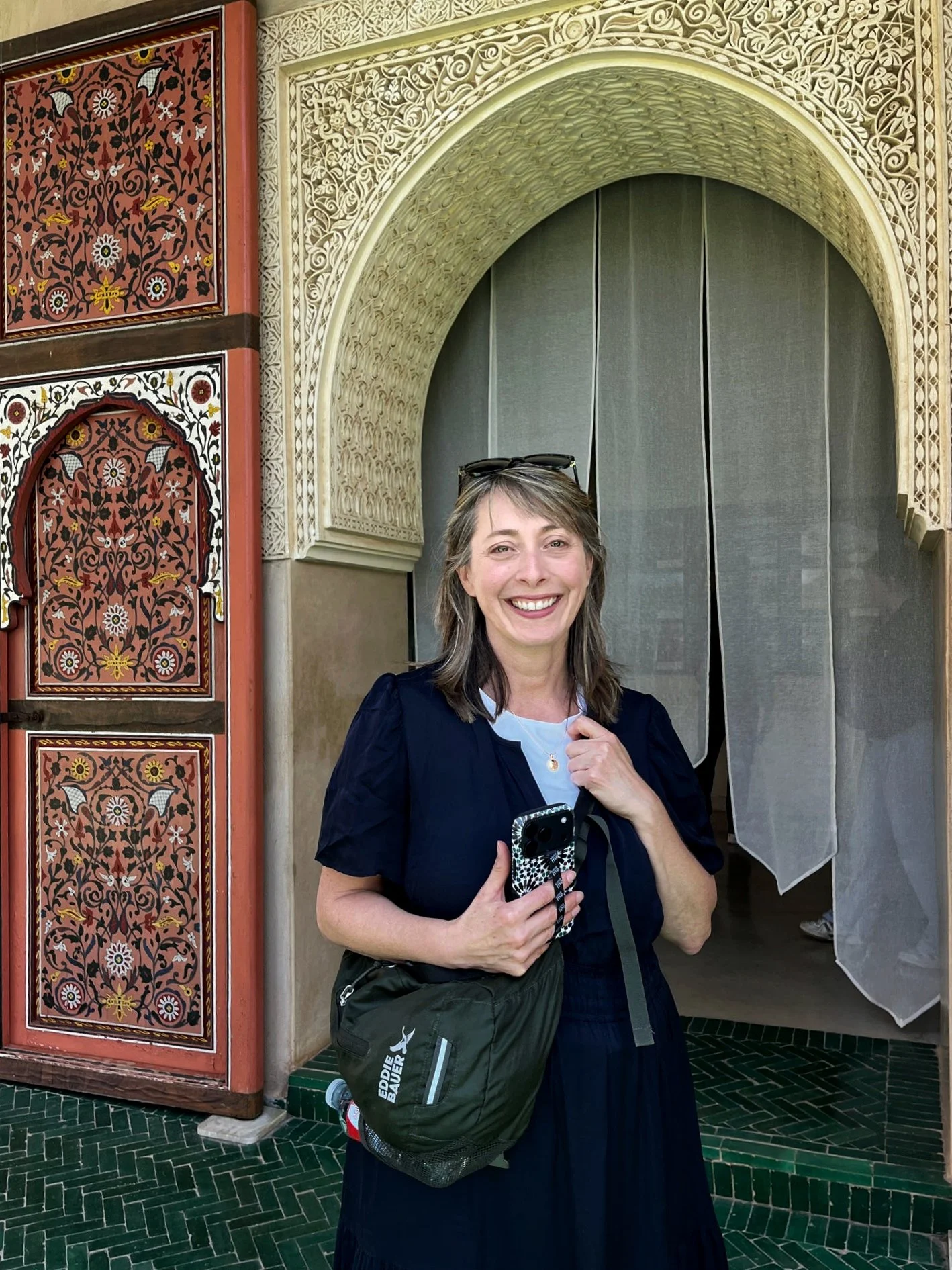
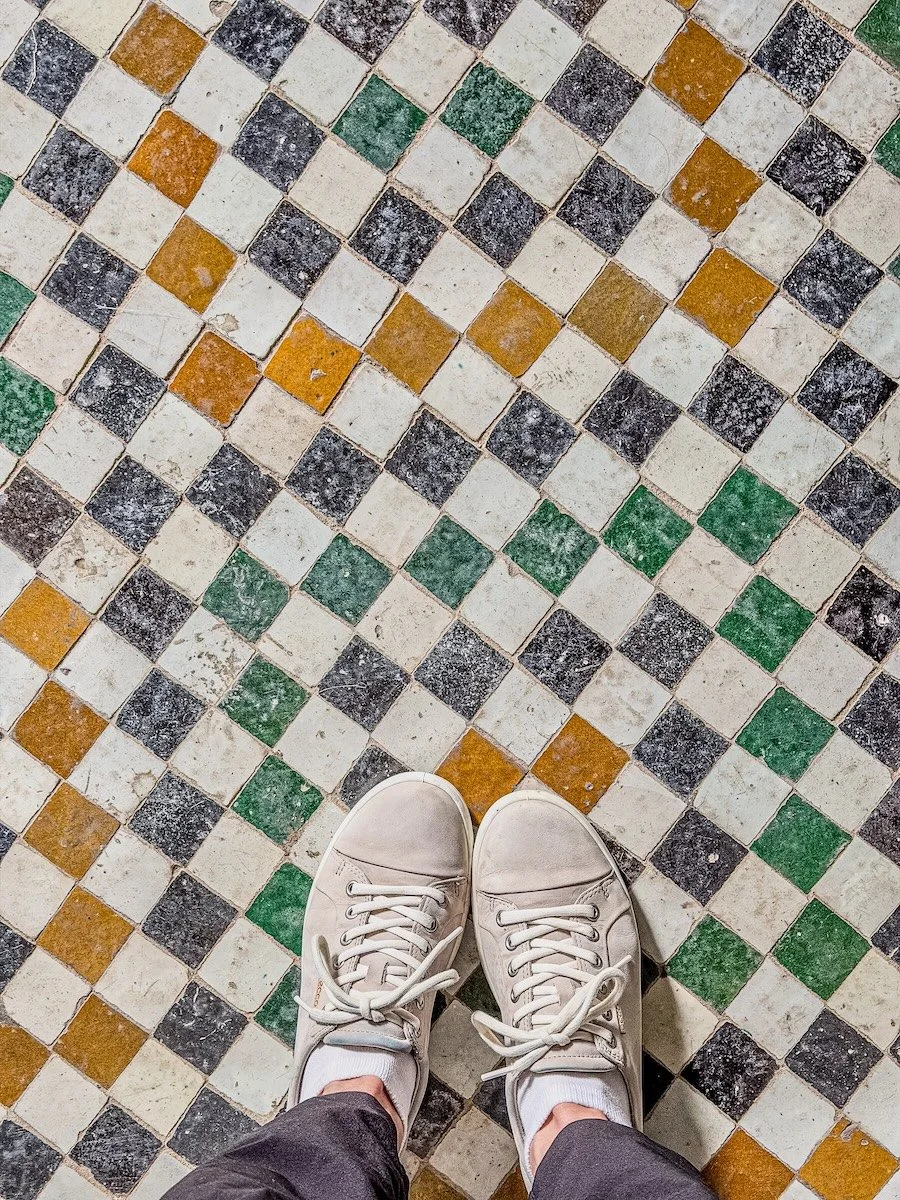
Following my curiosity in Morocco
The Questions I Kept Returning To
I've spent a lot of time since that first 10-week trip thinking about what made it feel different. It wasn’t only the length of time away, but also a certain approach to the time available. Slower, unhurried, looser schedule - allowing time to follow curiosity and dive in.
So why does some travel feel expansive and some simply exhausting? And what does it actually take to follow curiosity past the obvious and into something that stays with you?
Those types of questions are the foundation of everything I do at Travel Bug Tonic. Not just the writing, but the framework underneath that informs my coaching and travel field guides. The idea that travel meets us differently depending on where we are, and that knowing your travel "why" changes everything about how you plan, choose, and show up for a trip.
Not every trip serves the same purpose. This short quiz helps you find out what travel could actually do for you at this moment in your life.
No labels. No types.
Just a clearer sense of where to point yourself next.