
Designing a Reading Retreat: How I'm Planning Mine (the Restorative Kind)
The Reading Retreat Premise
A few months ago, not long after hitting one of life’s rough patches, I went camping. No internet. No agenda beyond listening to the sound of the river. I had a book with me, and I devoured it. Cover to cover, the way I used to read as a kid.
I am both curious and motivated to re-create this experience. In the past, I’ve planned trips around cathedrals, trail systems, a cultural immersion, and a flight sale. Never around reading a book, and never including the specific conditions that allowed me to read the way I did that weekend.


Most of my trips are focused on experiences. I prefer slow travel, but don’t overtly leave the time or brain space in the itinerary to devour a book. Even the Camino, almost three weeks of nothing but walking, and I barely got a page read. I was too tired every single night. Exhausted, not rested! Rest is what I found at the river.
I don’t think it was the actual book I was reading either…although we can all remember a time when a plot was so tantalizing that you ended up reading while eating, while walking, and then stayed up until 2 am because you simply couldn’t put it down. My trip by the river, and the one I’m eager to recreate, requires more than a great plot. It requires a place, an open but nurturing schedule, and, most importantly, an intention for a restorative experience.
I always have at least one book on the go. I read maybe 50 a year, which I’m told is a decent pace, though I have friends who’d call that a slow month. Some days, I get a good chunk of reading done nestled in front of the fireplace or stretched out in the hammock (depending on the season). Most nights, it’s a few pages at bedtime, and on a busy day, I start yawning loudly before I hit the second page. That river camping trip wasn’t like that. I didn’t yawn once. In hindsight, I think it might have been an accidental Restorative Reading Retreat.
One well-known study out of the University of Sussex found that six minutes of reading can lower stress levels by up to 68%, more effectively than even a walk (42%) or a cup of tea (54%, still shockingly great). Not because reading is magic, but because it demands attention that pulls you fully out of wherever your mind has been circling. I really needed my attention to be pulled away from some of the hard stuff that was going on. Bonus, I drank tea while I read.
I know, I know, you can easily carve out a version of this at home. Run a bath, lock the bathroom door, and tell everyone you're unavailable for an hour. I've done it, and it works… for an hour. What travel adds is the whole rest of the day(s) around it. Away from home, there's no laundry pile in my peripheral vision, no dishes I can hear from the next room, no default routine pulling me back into it the second I put the book down. Going somewhere else means I get to envision an entire day around reading, be shaken loose from my usual patterns, and rebuild it into exactly what I want and need.
Great Places for a Restorative Reading Retreat
I’m not going to hand you any specific destinations. I’m going to hand you the criteria, because the right place for this kind of trip depends entirely on what brings ease to your nervous system.
Here’s what I’m looking for:
Somewhere I already know, or somewhere simple enough that I won’t spend the first day figuring out where anything is
Minimal transit. No multi-leg travel days, no navigating a transit system I’ve never seen
A slower pace built into the place itself, not something I have to force (like slowing down in a bustling city)
There’s a concept in psychology called Attention Restoration Theory that explains why the place matters and how it can help. Unfamiliar places demand a huge amount of your brain’s attention just for basic orientation: where’s the bathroom, how does the stove work, which way is the bank machine? Familiar or simple places skip that tax entirely. All that freed-up attention goes somewhere else. In this case, into a book.
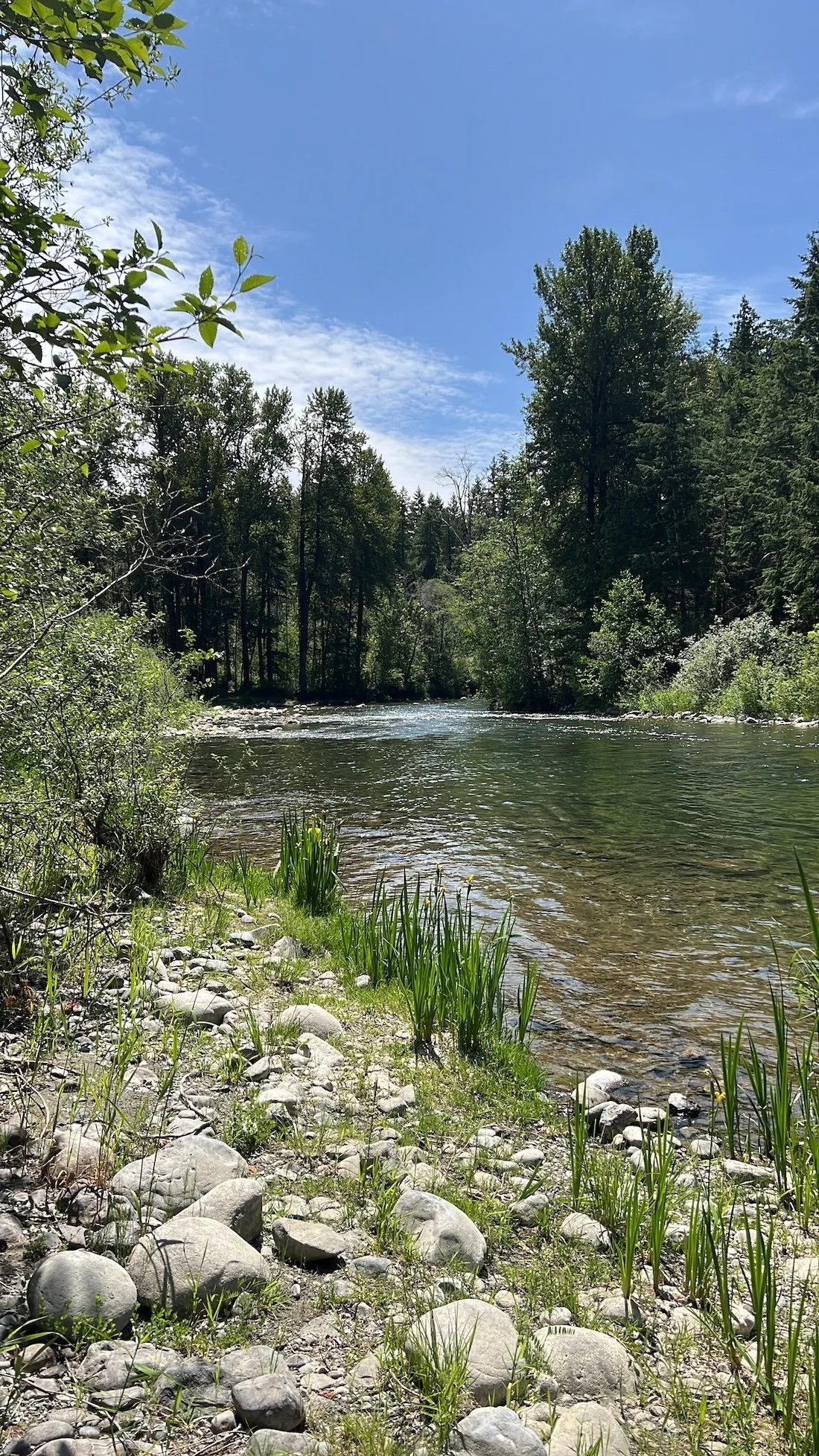
Not to be overlooked, one of the key ingredients of my river trip was having zero cell service or internet. That part's hard to plan for on purpose, so here's my workaround: choose a place with genuinely bad service (aka wilderness), or leave your phone in the car, or bribe yourself. A good coffee, a treat from town, whatever gets you through the itch to scroll. I'm not above bribing myself into good behaviour!
For my upcoming Restorative Reading Retreat, this is the model: I will choose a place that is a little familiar and very “chill”. I’ve been looking at glamping on a farm a couple of hours’ drive from my house. I’ve never been there, but it looks blissful, quiet, and with enough interesting (but not too many) things to do when and if I put down my book.
Book Options
This is the part that makes this Reading Retreat different from just “going somewhere quiet to read.”
I want the book, or books, to match the place, or match the vibe.
Choose a novel actually set in the place you are staying, or let your novel choice influence where you go instead. Match the season or the weather in the book to the season or weather where you'll be. Or skip all of that and make sure the tone lines up.
For my Farm Glamping Restorative Reading Retreat, I’m thinking about A Recipe for Bees by Gail Anderson-Dargatz, actually set on Vancouver Island on a farm with bees. And/or I’m considering The Things We Never Say by Elizabeth Strout, a new and highly rated book offering insight into the nuances of human behaviour and “making peace with the mysteries at the heart of our existence.”
Have some other book suggestions? Drop me a comment!
Where to Stay
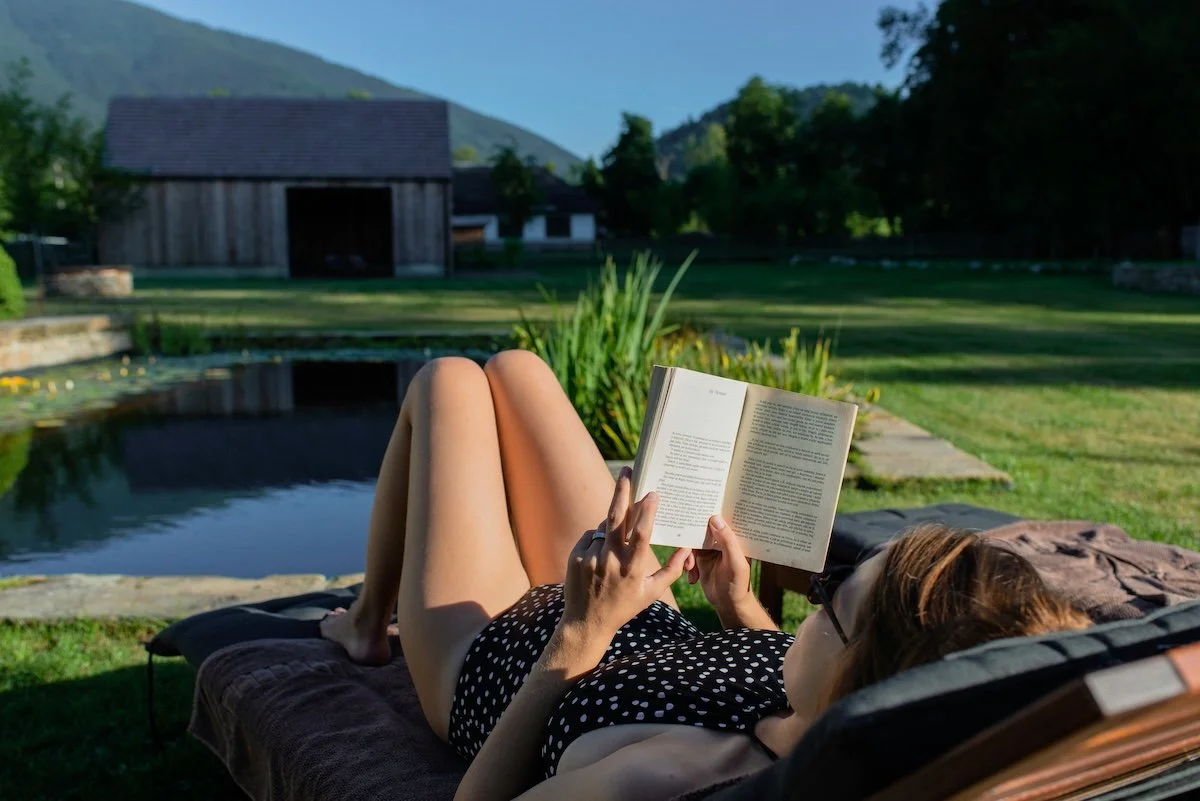
As mentioned, my reading will likely be done in a comfy Adirondack chair, or on a dock with my feet in the lake, or nestled in a comforter inside a yurt. Not just any place with a bed qualifies. The place also needs a kitchen set up so I can make my own coffee and fill my days with healthy snacks.
Your Restorative Reading Retreat might be a cabin in the mountains, a sweet home on an island (I was lucky to have this experience a few years ago and read a lot!), or near the beach where you can bury your toes in the sand while burying your nose in a book.
What a Day Looks Like
Not scheduled. Shaped.
Morning. Coffee first, in bed, before anything else gets decided.
Late morning. This is the part I don't often get at home. Between the house, the garden, errands, and being available for everyone else, daytime reading rarely happens. Here, it gets first claim: after breakfast, in the sun, in a hammock if there's one to be found.
Afternoon. A walk, or whatever moves my body enough to make sitting back down feel good again. This is also where the one anchor activity lives, a single planned thing like a trail, a dock, or a visit into town, so the day has a shape to hold onto without being scheduled. A snack that isn't rushed. Maybe a nap I don't apologize for.
On the Glamping Farm version I’m planning, I hope to participate in an on-site apiary tour (hence the bee-inspired book) and a sauna session.
Evening. Whatever the day ends with is good. Firelight if there's a fireplace, a blanket if there isn't. Sometimes that's finishing the last chapter. Sometimes it's just sitting with what I read, maybe with a journal and pens. Usual bedtime pages, except this time I'm not fighting to stay awake for them.
There's a reason unstructured time like this feels productive even though nothing gets checked off. Rest activates what neuroscientists call the default mode network, the same system responsible for memory consolidation and creativity. Doing "nothing" isn't a gap in the day. It's when a lot of the actual integration happens, whether that's about the book or about whatever needs some perspective.
What to Have On Hand
This is a short list, on purpose:
The book, obviously, plus one or two backups in case it isn’t the right one after all
A notebook and a pen, for lines I want to remember or thoughts the book stirs up
Sticky tabs, for passages I’ll want to find again
Something to make a good chair even better. A blanket, a pillow, whatever makes staying in it for three hours an easy decision
Coffee and snacks
Normally, I travel with ebooks and audiobooks, purely for weight. But this trip isn’t about packing light, it’s about packing right, so a real paper book gets to come along. Sticky tabs don’t work nearly as well on a screen.
That’s it. This isn’t a trip that needs much.
The Permission Piece
I know how this sounds on paper. A whole trip built around reading a book I could technically read at home, on my own couch, for free.
But it’s less about the book and more about creating the space to allow the reading to feel nourishing. At home, I am the type of person who gets sucked into the thinking that reading for hours in the middle of the day needs to be earned first. I know quite a few of my friends will be shaking their heads right now - they have both discovered and fully accepted that reading time doesn’t require anything other than desire. But I’m not there yet, and I know some of you struggle with this too, especially when you are in a time of life when the tank is empty, when sorrow is persistent, or when you just want to go away and then come home feeling like yourself again.
Ready to Try This Yourself?
If a stretch of unscheduled time sounds like exactly what you need right now, too, this is the Restorative travel I'm planning to take. When I do, I'll come back with what the plan got right, what I'd change, and probably a book recommendation. Consider this the blueprint, and the real story is still to come.
This is what I write about every week. Come find me.
Not sure what you need from travel?
The Travel Bug Tonic quiz takes about two minutes and might tell you something useful.